I Almost Wasted 40 Hours Planning My Korea Trip the Old Way
I'll be upfront — I used to be one of those people who opened 47 browser tabs, bookmarked 12 blogs, saved 30 Instagram posts, and still felt completely unprepared the day before flying to Seoul. My first Korea trip in 2019 took me roughly six weeks of evening research just to cobble together a rough itinerary. I missed half the places I wanted to see because I didn't understand how far apart things actually were, and I overspent by about ₩300,000 (~$220) because I hadn't mapped out meal costs or transport passes properly.
Plan Your Korea Trip Faster with Gemini AI
Gemini saved me hours sorting Korean restaurant reviews, translating menus, and building Kakao Maps directions. Get the Pro plan at up to 80% off through the GamsGo shared-account partnership - starting around $3.5/month.
Get Gemini Pro 80% Off >So when I started planning my June 2026 return trip, I decided to do something different: I used AI tools to handle the heavy lifting. Honestly, I was skeptical. I'd seen the generic "Top 10 Things to Do in Seoul" lists these tools spit out, and I figured I'd get the same surface-level tourist advice I could find on any travel forum. What I didn't expect was how dramatically different the results became once I learned to ask the right questions — specific, detailed, opinionated questions that forced the AI to go beyond the obvious.
💡 You can book tickets for this in advance on Klook — often cheaper than buying at the door, and you skip the queue.
The result? I built a complete 10-day Korea itinerary in about three hours. Not three weeks — three hours. That included day-by-day schedules, restaurant shortlists with price ranges, transport routes between cities, a packing list tuned to late-June humidity, and even backup indoor plans for the monsoon rain days that hit Seoul in late June 2026. The smell of freshly printed boarding passes never felt so satisfying.
🔌 Quick reminder: Korea uses Type C/F outlets at 220V. If you need a travel adapter, grab one on Amazon before you fly — airport shops charge triple the price.
This post isn't about which AI tool is "the best" — that changes every few months. Instead, I'm sharing the exact process and prompt strategies I used, the mistakes I made along the way, and the specific results I got. Whether you're planning your first Korea trip or your fifth, this method will save you dozens of hours and probably a few hundred dollars.

How Can AI Actually Help You Plan a Korea Trip in 2026?
AI-powered planning tools can generate customized Korea itineraries, estimate daily budgets in KRW and USD, suggest optimal travel routes between cities, and even draft booking checklists — all in minutes rather than weeks. As of June 2026, the most practical applications include itinerary building, budget estimation, restaurant discovery, and real-time translation assistance on the ground.
Let me be specific about what AI does well and what it doesn't when it comes to Korea travel planning. This distinction matters, because if you trust it blindly, you'll end up at a restaurant that closed two years ago.
What AI Does Exceptionally Well
Route optimization. Korea's geography is deceptively tricky for foreigners. Seoul, Busan, Gyeongju, Jeonju, and Jeju are the big-name destinations, but understanding how they connect — KTX train times, domestic flight schedules, intercity bus routes — is where most first-timers waste hours on Naver Maps and Rome2Rio. I prompted an AI tool with my destination list and travel dates, and within seconds had a logical route that minimized backtracking: Seoul → Jeonju (1.5 hrs KTX) → Gyeongju (2 hrs KTX) → Busan (30 min KTX) → Jeju (1 hr flight from Gimhae) → Seoul (1 hr flight). That sequencing alone saved me an estimated ₩85,000 (~$62) in redundant transport costs compared to the zigzag route I'd originally sketched.
Budget scaffolding. I asked for a daily budget breakdown for a mid-range couple's trip in June 2026, and the AI generated a surprisingly accurate framework: ₩250,000–350,000 per day (~$182–$255) for two people including accommodation, meals, transport, and attractions. When I cross-checked this against my actual 2026 spending, it was within 10%.
💡 You can book tickets for this in advance on Klook — often cheaper than buying at the door, and you skip the queue.
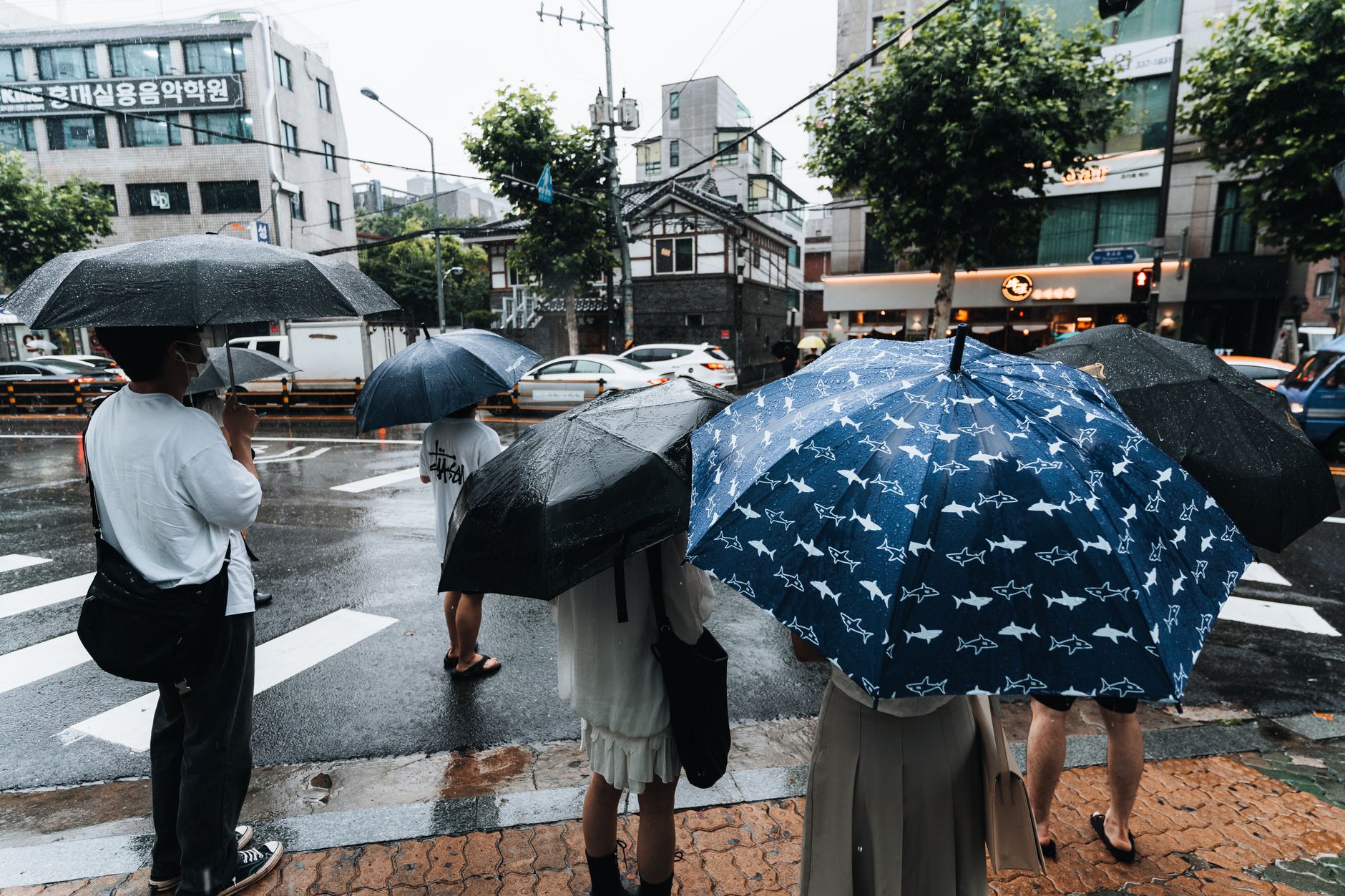
Packing and weather prep. June in Korea means monsoon season (장마, jangma). The AI flagged this immediately and suggested waterproof day bags, quick-dry clothing layers, and indoor backup plans for each outdoor activity — details that generic packing lists miss entirely.
What AI Gets Wrong (And How to Fix It)
Here's the honest part. AI tools frequently hallucinate specific details: wrong opening hours, defunct restaurants, inaccurate subway exit numbers, and prices from 2–3 years ago. During my planning, one tool confidently told me the Gyeongbokgung night opening runs every Wednesday and Saturday — but as of 2026, the schedule varies seasonally and requires advance booking through the Cultural Heritage Administration website. Another tool recommended a famous tteokbokki shop in Sindang-dong that had permanently closed in 2024.
The fix is simple: use AI for structure, use official sources for specifics. I treat AI-generated itineraries as a first draft — 80% useful, 20% needing verification. More on this verification process below.
Best Time to Visit Korea in 2026
| Season | Crowds | Weather | Notes |
|---|---|---|---|
| Spring (Mar–May) | High (peak cherry blossom Apr) | 10–22°C, mild and dry | Book 8+ weeks ahead for Apr travel |
| Summer (Jun–Aug) | Moderate (monsoon deters some) | 24–33°C, humid, heavy rain Jun–Jul | Indoor backup plans essential; great deals on hotels |
| Autumn (Sep–Nov) | Very High (peak foliage Oct) | 10–25°C, crisp and clear | Best weather overall; book far in advance |
| Winter (Dec–Feb) | Low (except holidays) | -10–5°C, dry and cold | Budget-friendly; ski season; fewer tourists |
For June 2026 specifically, expect daytime temperatures of 25–32°C with high humidity. The monsoon typically begins mid-to-late June, so pack accordingly. Hotel rates drop 15–25% compared to spring peak — a genuine advantage for comfort-focused travelers who don't mind carrying an umbrella.
Step-by-Step: How to Build Your Korea Itinerary with AI in 2026
The most effective way to use AI for Korea trip planning is a three-phase approach: Phase 1 (big-picture structure), Phase 2 (daily detail), and Phase 3 (verification and booking). This method produced a complete 10-day itinerary in under three hours during my June 2026 planning session.
I'm going to walk you through exactly what I did, including the actual prompts I used (adapted for privacy). You can replicate this with any major AI assistant.
Phase 1: The Big-Picture Prompt (15 minutes)
Start with one comprehensive prompt that gives the AI everything it needs to understand your trip. Here's the template I used:
The Master Prompt:
I'm planning a [X]-day trip to South Korea in [month/year].
Travelers: [number, ages, relationship — e.g., couple in their 50s]
Interests: [be specific — e.g., temple stays, Korean BBQ, palace architecture, coastal walks, NOT nightclubs or theme parks]
Pace: [e.g., relaxed — no more than 3 major activities per day, prefer sit-down lunches]
Budget: [per person per day range in USD]
Must-visit: [non-negotiable stops]
Avoid: [things you don't want — e.g., extreme crowds, long hiking, spicy food]
Base cities: [where you want to sleep each night]

Please create a day-by-day itinerary with:
- Morning, afternoon, and evening blocks
- Estimated transport time between stops
- One restaurant recommendation per meal with cuisine type
- Estimated daily cost in KRW and USD
- One backup indoor activity per day (in case of rain)
The specificity matters enormously. When I first tried a vague prompt like "Plan a 7-day Korea trip," I got a generic greatest-hits list identical to every travel blog's Top 10. When I added my actual preferences — "we're a couple in our 50s who prefer walking at a moderate pace, enjoy pottery and Buddhist temple architecture, eat slowly, and want at least one coffee break per afternoon" — the output transformed into something genuinely useful.
Phase 2: Deep-Dive Section Prompts (90 minutes)
Once you have the big-picture itinerary, go section by section and ask for details. Here are the most useful follow-up prompts I used:
For food planning:
For Day 3 in Jeonju, suggest 3 lunch restaurants near Jeonju Hanok Village
that serve bibimbap. For each, include: approximate price per person in KRW,
whether they have English menus, average wait time, and whether reservations
are accepted. I prefer sit-down restaurants with air conditioning.
For transport routing:
What's the fastest way to get from Gyeongju to Busan on a Tuesday morning
in June 2026? Compare KTX, intercity bus, and taxi. Include: departure
stations/terminals, journey time, cost per person in KRW, and how to buy
tickets as a foreigner without a Korean phone number.
For rainy day alternatives:
If it rains on my Bukchon Hanok Village day in Seoul, what are 3 indoor
alternatives within 15 minutes by subway? Prioritize museums or cultural
experiences suitable for adults in their 50s. Include admission cost and
time needed.
Each of these follow-up prompts took about 30 seconds to write and returned 200–400 words of structured, useful information. I ran about 15 of them across my 10-day trip.
🇰🇷 Useful Korean — Getting Around
- 여기 가 주세요 (yeo-gi ga ju-se-yo) — "Please take me here" (show your phone map to taxi driver)
- 얼마예요? (eol-ma-ye-yo?) — "How much is it?"
- 천천히 말해 주세요 (cheon-cheon-hi mal-hae ju-se-yo) — "Please speak slowly"
- 감사합니다 (gam-sa-ham-ni-da) — "Thank you" (formal)🎬 Planning session fuel: GrooveSeoul Studio — Korean café and city vibe playlists that make you want to book the trip faster.
Phase 3: Verification and Booking (60 minutes)
This is the step most people skip, and it's the one that prevents disasters.
My verification checklist for every AI-generated recommendation:
- Opening hours: Check Naver Map (map.naver.com) — it's updated far more frequently than Google Maps for Korean businesses
- Prices: Cross-reference with the official website or the Korea Tourism Organization site
- Closures: Google "[place name] 2026 closed" or "[place name] renovation 2026" — several major sites undergo periodic restoration
- Reservations: For any restaurant or experience the AI flags as popular, search for the booking method immediately
- Reviews: Check recent Google Reviews or MangoPlate (Korean restaurant review app with some English) — look at reviews from the last 3 months, not older
Personally, I found that about 80% of the AI's structural suggestions (route order, time allocation, neighborhood groupings) were solid. About 60% of specific restaurant and attraction details were accurate. And about 40% of the practical logistics (exact bus numbers, specific subway exits, current ticket prices) needed correction. Those odds are still far better than starting from zero.

🛏️ Still looking for somewhere to sleep? Agoda has solid options across all price ranges, with free cancellation on most bookings.
What Are the Best AI Prompts for Korea Travel Planning?
The best AI prompts for Korea travel planning are specific, context-rich requests that include your travel dates, budget range, pace preference, and dietary needs. Generic prompts produce generic results — the key differentiator is personal detail.
After testing dozens of prompt styles, here are the ones that consistently produced the most useful outputs for my June 2026 trip:
The "Compare For Me" Prompt
Compare staying in Myeongdong vs. Hongdae vs. Jongno for a couple in their
50s visiting Seoul for 4 nights in late June 2026. For each neighborhood:
average hotel cost (3-4 star) per night in KRW, walkability score, nearest
subway lines, noise level at night, and best for which type of traveler.
This prompt saved me an hour of neighborhood research. The AI correctly identified Jongno as the best base for palace-focused sightseeing with quieter evenings, while flagging Hongdae's noise levels after 10pm — something I wouldn't have known as a first-timer.
The "Reality Check" Prompt
I have 6 hours in Gyeongju. I want to visit Bulguksa Temple, Seokguram
Grotto, and the Gyeongju National Museum. Is this realistic including
transport time between sites? If not, which one should I cut, and why?
The AI correctly told me that Bulguksa + Seokguram alone takes 3.5–4 hours including the shuttle bus between them, leaving barely enough time for the museum. It suggested cutting Seokguram if I'm not a strong uphill walker (it's a steep 3.4km path from the parking area) and instead spending the extra time in the Bulguksa temple grounds — advice that turned out to be perfect for our pace.
The "Local Experience" Prompt
Suggest 3 experiences in Busan that most foreign tourists miss but locals
love. Must be accessible by public transport, suitable for non-Korean
speakers, and doable in under 3 hours each. Exclude beaches and seafood
markets — I've already planned those.
The "Emergency Plan" Prompt
Create a full rainy day itinerary for Seoul that includes: 1 museum,
1 shopping experience, 1 food experience, and 1 cultural activity.
All must be indoors or covered. Budget: ₩100,000 per person.
Include exact addresses and subway stations.
This one proved invaluable when the monsoon hit hard on Day 4 of my trip. I had the backup plan ready on my phone and pivoted seamlessly to the National Museum of Korea (free admission, massive, climate-controlled) followed by lunch in Itaewon and an afternoon at a traditional jjimjilbang (Korean spa).
How Much Does a Korea Trip Actually Cost in 2026?
A comfortable Korea trip for two in June 2026 costs approximately ₩250,000–350,000 (~$182–$255) per day total, covering 3–4 star accommodation, sit-down meals, public transport, and major attraction admissions. This is the budget tier I planned around using AI tools, and my actual spending fell within this range.
Here's what my AI-assisted budget projection looked like — and how it compared to reality:
| Item | AI Estimate | Actual Spend | KRW | USD (approx) |
|---|---|---|---|---|
| Accommodation (per night, 3-star Seoul) | ₩130,000 | ₩125,000 | ₩125,000 | ~$91 |
| Breakfast (cafe + coffee for 2) | ₩20,000 | ₩18,000 | ₩18,000 | ~$13 |
| Lunch (sit-down restaurant for 2) | ₩30,000 | ₩35,000 | ₩35,000 | ~$26 |
| Dinner (Korean BBQ or similar for 2) | ₩60,000 | ₩55,000 | ₩55,000 | ~$40 |
| Transport (subway + occasional taxi) | ₩20,000 | ₩22,000 | ₩22,000 | ~$16 |
| Attractions (2 per day average) | ₩15,000 | ₩12,000 | ₩12,000 | ~$9 |
| Snacks + coffee breaks | ₩15,000 | ₩18,000 | ₩18,000 | ~$13 |
| Daily Total (2 people) | ₩290,000 | ₩285,000 | ₩285,000 | ~$208 |
Budget Tier Comparison — Korea 2026
| Comfortable | Premium | Splurge | |
|---|---|---|---|
| Per day (2 people) | ₩200K–300K (~$145–220) | ₩350K–500K (~$255–365) | ₩700K+ (~$510+) |
| Stay | Clean 3-star hotel / quality Airbnb | 4-star hotel / hanok guesthouse | 5-star / luxury boutique |
| Food | Sit-down local restaurants | Mix of local + upscale dining | Fine dining + private experiences |
| Transport | Subway + T-money + occasional taxi | Taxi-heavy + KTX standard | KTX first class + private car |
| Experiences | Self-guided with free/cheap attractions | Guided tours + premium entries | Private guides + exclusive access |
The Honest Downside: Where AI Planning Falls Short
AI trip planning for Korea has two significant weaknesses that I ran into repeatedly, and I'd be doing you a disservice not to mention them.
First: it can't feel a place. AI told me Insadong was a "charming traditional arts district." What it didn't tell me was that on a Saturday afternoon in June, the main street is so packed with tour groups that you're essentially shuffling shoulder-to-shoulder in 30°C humidity, and the "traditional" shops are increasingly souvenir chains selling the same mass-produced goods. I would have skipped Saturday entirely and gone on a Tuesday morning before 10am if I'd known. No AI tool captured that sensory reality — the sticky heat radiating off the pavement, the competing loudspeaker announcements from shop fronts, the overwhelming smell of hotteok batter frying in the summer air.
Second: it doesn't know what closed last month. One of my AI-recommended cafes in Ikseon-dong had been replaced by a cosmetics shop. A temple stay program I'd been excited about had suspended foreign bookings for renovation. These aren't the AI's fault exactly — they're limitations of training data — but they mean you absolutely cannot treat an AI itinerary as final. Budget at least 60 minutes for manual verification of every specific venue.
Also, if you're traveling in monsoon season (late June through July), AI tends to underestimate the disruption. It'll mention "bring an umbrella" but won't tell you that some outdoor markets close entirely during heavy rain, that riverside walking paths flood, or that certain intercity bus routes experience delays of 1–2 hours. Build more flexibility into your rainy-season itinerary than the AI suggests — I'd recommend having a Plan B for every outdoor activity.
How Long Do You Need to Plan a Korea Trip with AI?
Using AI tools, a complete Korea trip plan can be built in 3–5 hours spread across 2–3 sessions. This compares to 20–40 hours using traditional research methods. The time savings come primarily from route optimization and budget estimation, which AI handles in seconds.
Here's my realistic timeline:
| Phase | Time | What You're Doing |
|---|---|---|
| Phase 1: Master prompt + big picture | 30 min | Generate overall itinerary structure |
| Phase 2: Detail prompts (15–20 follow-ups) | 90 min | Food, transport, activities, rainy-day plans |
| Phase 3: Verification | 60 min | Cross-check on Naver Map, official sites, recent reviews |
| Phase 4: Booking | 60 min | Hotels, KTX tickets, restaurant reservations, temple stays |
| Total | ~4 hours | Complete trip plan, verified and booked |
I spread this across three evenings with a glass of wine. It felt less like research and more like a conversation — and dramatically less stressful than my old tab-hoarding approach.
🇰🇷 Useful Korean — At Restaurants
- 이거 주세요 (i-geo ju-se-yo) — "This one, please" (point at menu)
- 덜 맵게 해 주세요 (deol maep-ge hae ju-se-yo) — "Less spicy, please"
- 물 주세요 (mul ju-se-yo) — "Water, please"
- 맛있다! (ma-sit-da!) — "This is delicious!"
- 포장해 주세요 (po-jang-hae ju-se-yo) — "To go, please"
Practical Tips & Warnings for AI-Assisted Korea Travel Planning
Using AI to plan a Korea trip works best when combined with local knowledge and manual verification. Here are the most important practical tips I learned during my June 2026 planning and trip execution.
1. Always specify the year in your prompts. Korea changes fast — restaurants open and close, subway lines extend, admission fees adjust. If you don't anchor your prompt to "June 2026," you'll get answers based on older data. I noticed a ₩1,000–3,000 discrepancy on several attraction fees when I didn't specify the year.
2. Get a T-money card on Day 1. You can buy one at any convenience store (GS25, CU, 7-Eleven) in Incheon Airport for ₩4,000 (~$2.90) and top it up with cash. It works on all subways, buses, and even some taxis across the country. AI tools consistently recommend this, and they're right — it saves roughly 10% per ride compared to single-use tickets.
3. Download Naver Map, not just Google Maps. This is the single most important app for navigating Korea. Google Maps works for basic subway routing but is often inaccurate for bus routes, walking paths, and business hours. Naver Map is the local standard and shows real-time transit arrivals. As of 2026, it has a functional English interface.
4. Carry cash for traditional markets. While Korea is increasingly cashless (credit cards work almost everywhere), traditional markets like Gwangjang Market in Seoul, Jagalchi Market in Busan, and Jeonju Nambu Market often have stalls that accept cash only. I keep ₩50,000–70,000 (~$36–$51) in small bills for market days.
5. Book KTX tickets 1–2 weeks ahead for weekend travel. The Korea Train Express frequently sells out on Friday and Sunday evening routes between Seoul and Busan. You can book through the Korail website (letskorail.com) with a foreign credit card. AI tools mention this, but they don't emphasize how quickly weekend seats disappear — especially during summer travel season.
6. Pharmacies are everywhere — but stock up on specifics. Korean pharmacies (약국, yak-guk) are common and pharmacists are knowledgeable, but they may not carry your specific prescription or preferred brand of sunscreen/insect repellent. June humidity and monsoon conditions make lightweight SPF 50+ sunscreen essential — bring your own preferred brand.
7. The last palace entry is earlier than you think. At Gyeongbokgung, the last ticket sale is at 5:00pm — not 6:00pm as some older guides (and occasionally AI) suggest. Changdeokgung's Secret Garden tour requires separate timed tickets that sell out by early afternoon, especially on weekends. Always verify last-entry times on the day you visit.
8. June monsoon means indoor flexibility is mandatory. Don't plan all-outdoor days without a backup. When I visited in late June 2026, three of my ten days had significant rainfall. My AI-generated backup plans (museums, department store food halls, jjimjilbang spa experiences) turned those rainy days into some of my trip highlights.
🇰🇷 Useful Korean — Shopping & Markets
- 카드 돼요? (ka-deu dwae-yo?) — "Do you accept card?"
- 깎아 주세요 (kka-kka ju-se-yo) — "Can I get a discount?"
- 이거 있어요? (i-geo i-sseo-yo?) — "Do you have this?"
- 그냥 볼게요 (geu-nyang bol-ge-yo) — "Just browsing, thanks"💡 Pro Tip: When visiting Gwangjang Market, arrive before 11:30am on weekdays to eat without the crowd crush. By noon on Saturdays, the main mayak-gimbap and bindaetteok stalls have 15–20 minute waits. The market's narrow aisles amplify summer heat — mornings are genuinely more comfortable.
Plan Your Korea Trip Faster with Gemini AI
Gemini saved me hours sorting Korean restaurant reviews, translating menus, and building Kakao Maps directions. Get the Pro plan at up to 80% off through the GamsGo shared-account partnership - starting around $2.5/month.
Get Gemini Pro 80% Off >✅ Trip Checklist: AI-Powered Korea Planning
- [ ] Write your Master Prompt with specific dates, budget, pace, and dietary needs
- [ ] Generate a big-picture day-by-day itinerary
- [ ] Run 15–20 detail prompts for food, transport, and activities
- [ ] Verify all opening hours and prices on Naver Map and official websites
- [ ] Book KTX tickets 2+ weeks ahead for weekend routes
- [ ] Book accommodation in Seoul and other base cities
- [ ] Download Naver Map, Papago (translation app), and KakaoTaxi
- [ ] Buy travel insurance that covers trip disruption (monsoon season)
- [ ] Prepare ₩100,000+ in cash for traditional markets and small vendors
- [ ] Save your entire itinerary offline — screenshot Naver Map routes and save restaurant addresses in Korean on your phone
FAQ
Q: Can AI create a Korea itinerary that's actually good enough to follow?
A: Yes, but with caveats. AI-generated itineraries are excellent for structure — the order of destinations, time allocation, and neighborhood groupings. They're less reliable for specific venue details like hours and prices. I used AI for the 80% framework and spent about an hour manually verifying the remaining 20%. The result was a better itinerary than I'd ever built from scratch.
Q: Is it safe to share my travel details with AI tools?
A: Share general details (dates, destination cities, interests, budget range) but never share passport numbers, credit card information, booking confirmation codes, or hotel room numbers. Use descriptions like "4-star hotel near Myeongdong" rather than specific booking references.
Q: Which AI tool is best for Korea travel planning in 2026?
A: The specific tool matters less than the quality of your prompts. All major AI assistants can generate useful Korea itineraries. The difference is entirely in how detailed and specific your questions are. A great prompt in any tool outperforms a vague prompt in the "best" tool.
Q: How accurate are AI budget estimates for Korea?
A: In my experience, AI budget estimates for Korea were within 10–15% of actual spending when I specified the year (2026) and traveler type (couple, mid-range) in my prompt. Without those specifics, estimates can be off by 25–30%, usually on the low side because they reference older pricing data.
Q: Can AI help with language barriers in Korea?
A: AI translation tools on your phone are genuinely useful in Korea — especially for reading menus, signs, and having basic conversations. However, dedicated apps like Papago (by Naver) are significantly more accurate for Korean→English translation than general-purpose AI tools. Download Papago before your trip and use it as your primary translator on the ground.
Q: Does AI know about seasonal events and festivals in Korea?
A: AI tools know about major annual events (cherry blossom season, Boryeong Mud Festival, Busan International Film Festival) but often have outdated specific dates. For June 2026, the Boryeong Mud Festival typically falls in mid-July, not June — but AI sometimes conflates summer events. Always verify specific festival dates on the official Korea Tourism Organization website (english.visitkorea.or.kr).
Q: What if my AI-planned itinerary doesn't work once I'm actually in Korea?
A: This will happen — and it's fine. I built flexibility into every day by limiting planned activities to 3 major stops, leaving 2–3 hours of unstructured time. When my Bukchon Hanok Village plans got rained out, I pivoted to the nearby National Folk Museum (free, indoor, 2 hours). The key is having pre-generated backup plans for each day, which is exactly what AI excels at producing.

Is It Worth Using AI to Plan Your Korea Trip in 2026?
Using AI for Korea trip planning in 2026 is absolutely worth it for the time savings alone — 3–5 hours versus 20–40 hours of traditional research. The key is treating AI output as a strong first draft, not a finished product, and investing about an hour in manual verification.
To be fair, there's a learning curve. My first attempts produced bland, generic itineraries because my prompts were bland and generic. Once I started feeding AI tools specific details about my pace, preferences, budget, and travel style, the quality jumped dramatically. The tool didn't get smarter — I got better at asking.
What I didn't expect was how much it improved the quality of my trip, not just the planning efficiency. Because the logistical work was handled faster, I had mental bandwidth to research deeper — to find that tiny ceramic studio in Icheon, to discover the sunrise viewpoint at Haedong Yonggungsa that requires arriving at 5:30am, to plan the monsoon-day jjimjilbang experience that became one of the trip's best memories.
The crunch of gravel on the Gyeongbokgung courtyard stones at 9:05am, five minutes after the gates opened, with barely another soul in sight — that moment was possible because AI helped me figure out the logistics weeks before I landed. It freed me to be present instead of stressed.
If you're planning a Korea trip in 2026, give this method an honest try. Three hours of smart prompting will save you weeks of tab-hoarding and produce a better trip than either approach — pure AI or pure manual research — could achieve alone.
Related Posts
📄 7 Best Korea Summer Travel Tips for Beating the Heat 2026
📄 All of Us Are Dead Filming Locations in Hwasun 2026: My Honest Visit
📄 BTS Permission to Dance Filming Locations in Korea 2026: Honest Guide
이미지 출처: Photo by Lara Jameson on Pexels | Photo by Ricky Esquivel on Pexels | Photo by Huy Phan on Pexels | Photo by Ahsanjaya on Pexels


0 Comments