この話題を日本語で読む: 韓国旅行 持ち物チェックリスト2026【女子の本音リスト】
I Almost Canceled My June Korea Trip — Here's Why I'm Glad I Didn't
Honestly, I nearly rescheduled the whole thing. Every forum post I read about Korea in June said the same thing — "unbearable humidity," "pack extra shirts," "you'll sweat through everything." I'd been to Southeast Asia in monsoon season before and figured Korean summer would be a lesser version of that. I was wrong, but not in the way you'd expect.
The heat is real. Let me not sugarcoat that. When I stepped out of Incheon Airport on June 14, 2026, the air felt like walking into a warm, damp towel. By noon, my phone weather app was showing 31°C (88°F) with 78% humidity. My cotton t-shirt was a lost cause by lunchtime. But here's what changed my mind about summer Korea: I discovered that Koreans have spent centuries engineering ways to beat the heat, and once you tap into those strategies, the trip becomes not just survivable but genuinely enjoyable.
I spent ten days traveling from Seoul to the coast to the mountains, deliberately testing every cooling strategy I could find — underground shopping malls, valley streams, high-altitude temples, ice-cold naengmyeon noodles at 11 a.m. Some worked brilliantly. A few were overhyped. What I'm sharing here are the tips that actually made the difference, not the generic "drink water and wear sunscreen" advice you've already heard.

This post is specifically written for the June 2026 heat wave (and it's shaping up to be a warm one — the Korea Meteorological Administration has already flagged this summer as likely hotter than average). If you're traveling Korea between late May and early July, before the monsoon rain bands settle in around mid-July, this guide is for you. Let me save you the trial-and-error I went through.
What Makes Korea's June Heat Different From Other Asian Destinations?
Korea's June heat is distinctive because of its rapid temperature swings and escalating humidity, not raw temperature alone. Average daily highs in Seoul reach 28–32°C (82–90°F) in June 2026, but the real-feel temperature with humidity often pushes past 36°C (97°F). Unlike tropical destinations where heat is constant, Korea's mornings can feel pleasant before the humidity spikes brutally after noon.
What catches most foreign travelers off guard isn't the peak temperature — it's the combination of heat, humidity, and walking. Korea is a walking-heavy destination. You're climbing palace steps, navigating subway transfers with staircases, hiking temple trails. That physical effort in 75–85% humidity creates a fatigue curve that hits around 1–2 p.m. and doesn't let up until sunset.
The other factor: Korea's infrastructure is built for extreme seasons. This is both good news and a shock to your system. Department stores, subway stations, and convenience stores blast air conditioning at around 18–20°C (64–68°F). That means you'll swing between sweating outdoors and shivering indoors multiple times per day. This temperature whiplash actually makes people sick — I saw several travelers at Myeongdong pharmacies buying cold medicine in the middle of summer.
| Season | Crowds | Weather | Notes |
|---|---|---|---|
| Early June (Jun 1–15) | Moderate | 26–30°C, humidity building | Best window before peak heat; fewer tourists than July |
| Late June (Jun 16–30) | Moderate–High | 29–33°C, high humidity | Heat advisories possible; monsoon hasn't started yet |
| Early July (Jul 1–15) | High | 30–34°C, monsoon rain starts | Rainy season begins; umbrella essential |
| Late July–Aug | Peak | 32–36°C, heavy rain + extreme humidity | Typhoon risk; indoor-heavy itinerary recommended |
🗺️ Looking for guided tours here? Klook has English-speaking options — food tours and walking tours tend to sell out on weekends, so book ahead.
💡 Pro Tip: The sweet spot for June Korea travel in 2026 is June 1–18 — the monsoon front (jangma) is forecast to reach the central region around June 25–28 this year, so early June gives you hot but mostly dry weather with thinner crowds than peak summer.
How Do You Actually Beat the Heat in Korea? 7 Strategies That Work
Beating the June heat in Korea requires a combination of scheduling, location choices, and gear — not just willpower. The most effective strategy is restructuring your sightseeing hours: plan outdoor activities before 10 a.m. and after 4 p.m., and use the midday furnace hours for indoor attractions, meals, and rest.
🎟️ Pre-book this activity on Klook. Prices are competitive and cancellation is usually flexible.
Here are the seven strategies I tested and ranked by actual effectiveness:
1. Restructure Your Day Around the Heat Curve
This is the single most impactful change you can make. Most tourists walk out of their hotel at 10 a.m. and hit the pavement. By noon, they're wilting. By 2 p.m., they're sitting in a Starbucks wondering why they came.
Instead, set your alarm for 6:30 a.m. I know — it's vacation. But the difference is staggering. When I arrived at Changdeokgung Palace at 7:45 a.m. on a Tuesday, the temperature was 23°C (73°F), the light was golden, and there were maybe 15 other people in the entire complex. By 11 a.m. when I left, the tour buses were unloading and the heat index was already 33°C. I got the same palace, the same photos, a fraction of the crowds, and none of the suffering.
My tested schedule:
- 6:30–7:00 a.m.: Wake up, light breakfast
- 7:30–11:00 a.m.: Outdoor sightseeing (palaces, markets, parks)
- 11:00 a.m.–3:00 p.m.: Lunch + indoor activities (museums, underground shopping, jjimjilbang)
- 3:00–4:30 p.m.: Rest at hotel / café
- 4:30–9:00 p.m.: Evening sightseeing, dinner, night markets
2. Use Korea's Underground City to Your Advantage
Seoul has one of the world's most extensive underground networks, and in summer, it's your best friend. The subway system connects massive underground shopping complexes that are aggressively air-conditioned.
Best underground escapes in Seoul (2026):
- COEX Mall (Samseong Station, Line 2) — Southeast Asia-style mega mall, aquarium, library, all underground. You could spend 3–4 hours here without stepping outside.
- Gangnam Underground Shopping Center — stretches nearly 1 km from Gangnam Station to Sinnonhyeon Station. Affordable fashion, food courts, all at roughly 22°C.
- Express Bus Terminal Underground Mall (Goto Mall) — enormous, affordable, less touristy than Myeongdong. My wife found summer linen tops here for ₩15,000 (~$11).
- Yeongdeungpo Underground — near Times Square mall. Good for a rainy or scorching afternoon.
📍 COEX Mall
🚇 Getting there: Line 2, Samseong Station Exit 5/6 (direct underground connection)
⏱️ Time needed: 2–4 hours
💴 Admission: Free (aquarium separate: ₩33,000 / ~$24 as of 2026)
3. Eat Cold Korean Food — It's Designed for This
Korean cuisine has an entire category of summer dishes specifically created to combat heat. This isn't a gimmick — these are dishes Koreans have eaten in summer for centuries, and they work.
Must-try summer cooling dishes:
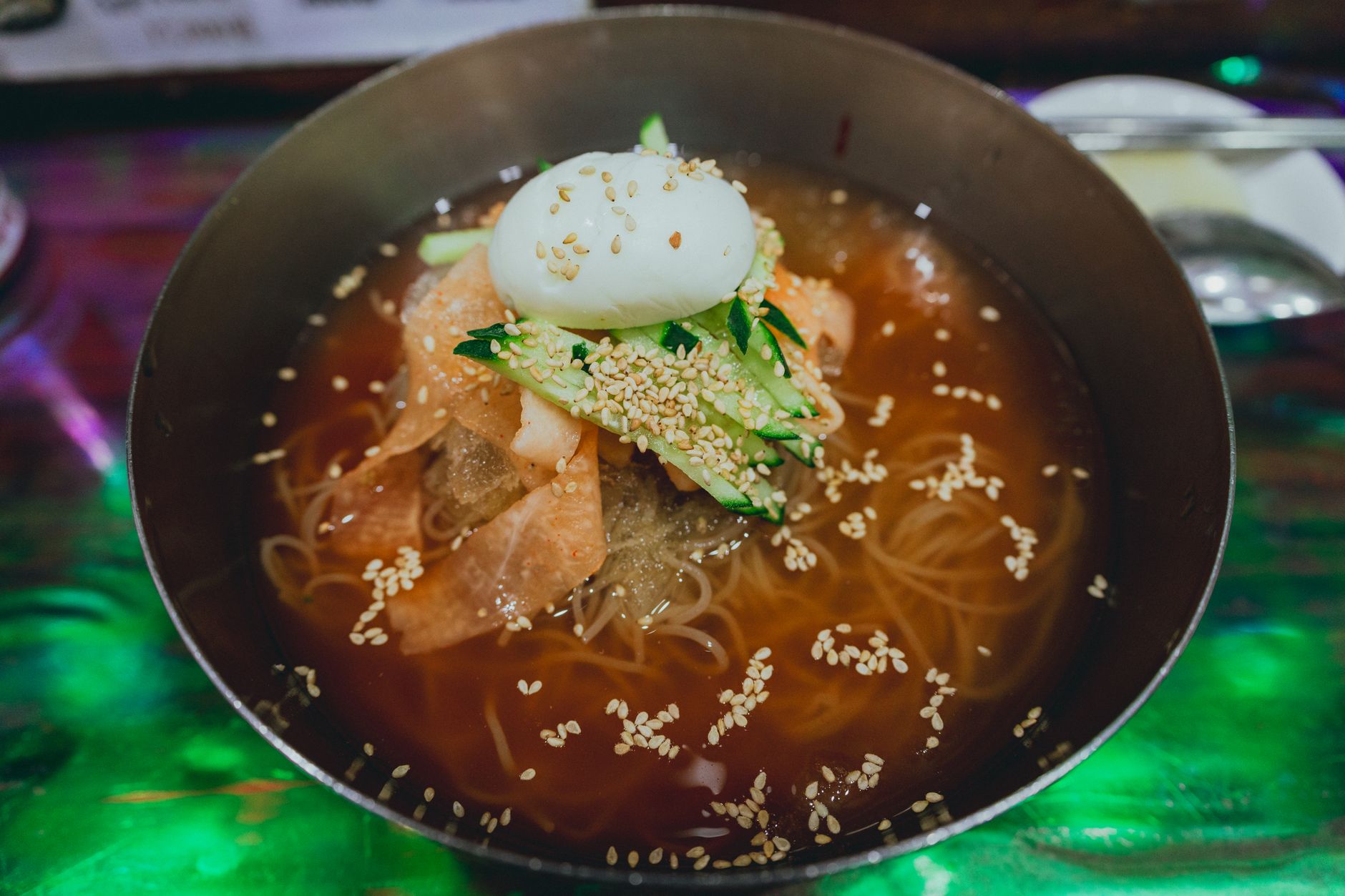
- 물냉면 (mul-naengmyeon) — ice-cold buckwheat noodles in chilled beef broth. The broth often arrives with ice chips floating in it. Average ₩11,000–14,000 (~$8–10). My favorite spot was Woo Lae Ok near Euljiro (in business since 1946).
- 콩국수 (kong-guksu) — noodles in cold soy milk broth. Sounds odd, tastes incredible. Silky, nutty, refreshing. Around ₩10,000–12,000 (~$7–9).
- 삼계탕 (samgyetang) — hot ginseng chicken soup. Counterintuitive, but Koreans believe eating hot soup in hot weather helps your body regulate temperature (it's called yi yeol chi yeol — "fight fire with fire"). Whether or not you buy the theory, the soup is delicious. ₩15,000–18,000 (~$11–13).
- 팥빙수 (patbingsu) — shaved ice with red bean, mochi, condensed milk. The ultimate summer dessert. Available everywhere from ₩8,000–15,000 (~$6–11).
🇰🇷 Useful Korean — Ordering Cool Food
- 이거 주세요 (i-geo ju-se-yo) — "This one, please" (point at menu)
- 물 주세요 (mul ju-se-yo) — "Water, please"
- 덜 맵게 해 주세요 (deol maep-ge hae ju-se-yo) — "Less spicy, please"
- 맛있다! (ma-sit-da!) — "This is delicious!"
4. Escape to the Mountains and Valleys
Seoul is ringed by mountains, and the temperature drops noticeably — often 3–5°C — once you get above 400 meters. But the real cooling magic is in Korea's gyegok (valley streams). These are shallow mountain streams with clear, cold water running over rocks, and Koreans have been using them as natural air conditioning for generations.
Best valley/mountain escapes within 1–2 hours of Seoul:
- Bukhansan National Park — take the trail toward Baegundae Peak but stop at Jeongreung Valley for a rest. The shade from the canopy and cool stream air drops the temperature dramatically. I sat on a rock at 10 a.m. and the thermometer read 24°C while Seoul below was baking at 31°C.
- Seoraksan National Park (Sokcho, ~2.5 hours from Seoul) — Biryong Falls trail has mist that literally cools you as you walk. Water temperature in the stream: about 15°C even in June.
- Jirisan National Park (further south, ~3.5 hours) — if you're doing a multi-day trip, the high elevation trails are summer perfection.
📍 Bukhansan National Park (Bukhansanseong Trail)
🚇 Getting there: Line 3, Gupabal Station Exit 1 → Bus 704 to trailhead (20 min)
⏱️ Time needed: 3–5 hours (half-day hike)
💴 Admission: Free as of 2026
5. Visit a Jjimjilbang (Korean Spa)
This sounds insane — a hot spa in summer? But jjimjilbangs have both heated rooms and cold rooms, plus ice rooms, cold plunge pools, and massive common areas with ondol (heated floor) lounging where the AC runs full blast. The ice room at Dragon Hill Spa in Yongsan kept at roughly 0°C is one of the most surreal experiences — you walk from 32°C outside into a room where your breath fogs.
Recommended jjimjilbang for summer:
- Dragon Hill Spa (Yongsan) — ₩20,000 (~$15) entry, open 24 hours. Has an outdoor pool in summer.
- Siloam Sauna (Seoul Station area) — ₩12,000 (~$9), popular with locals, less touristy. No English signage but staff can gesture you through.
- Spa Land (Busan, Centum City) — ₩18,000–22,000 (~$13–16), arguably the best jjimjilbang in Korea. Attached to Shinsegae department store.
📍 Dragon Hill Spa
📍 Address: 40 Hangang-daero 21na-gil, Yongsan-gu, Seoul
📍 View on Google Maps
🚇 Getting there: Line 1, Yongsan Station Exit 1 (3 min walk)
⏱️ Time needed: 2–5 hours
💴 Admission: ₩20,000 (~$15) as of 2026 (weekday); ₩25,000 (~$18) weekend
6. Pack the Right Gear
I cannot overstate how much the right clothing and accessories change the June Korea experience. Here's exactly what I packed and what I wish I'd packed:
What worked:
- Moisture-wicking shirts (not cotton — cotton absorbs sweat and stays wet). I brought three Uniqlo Airism undershirts and rotated them.
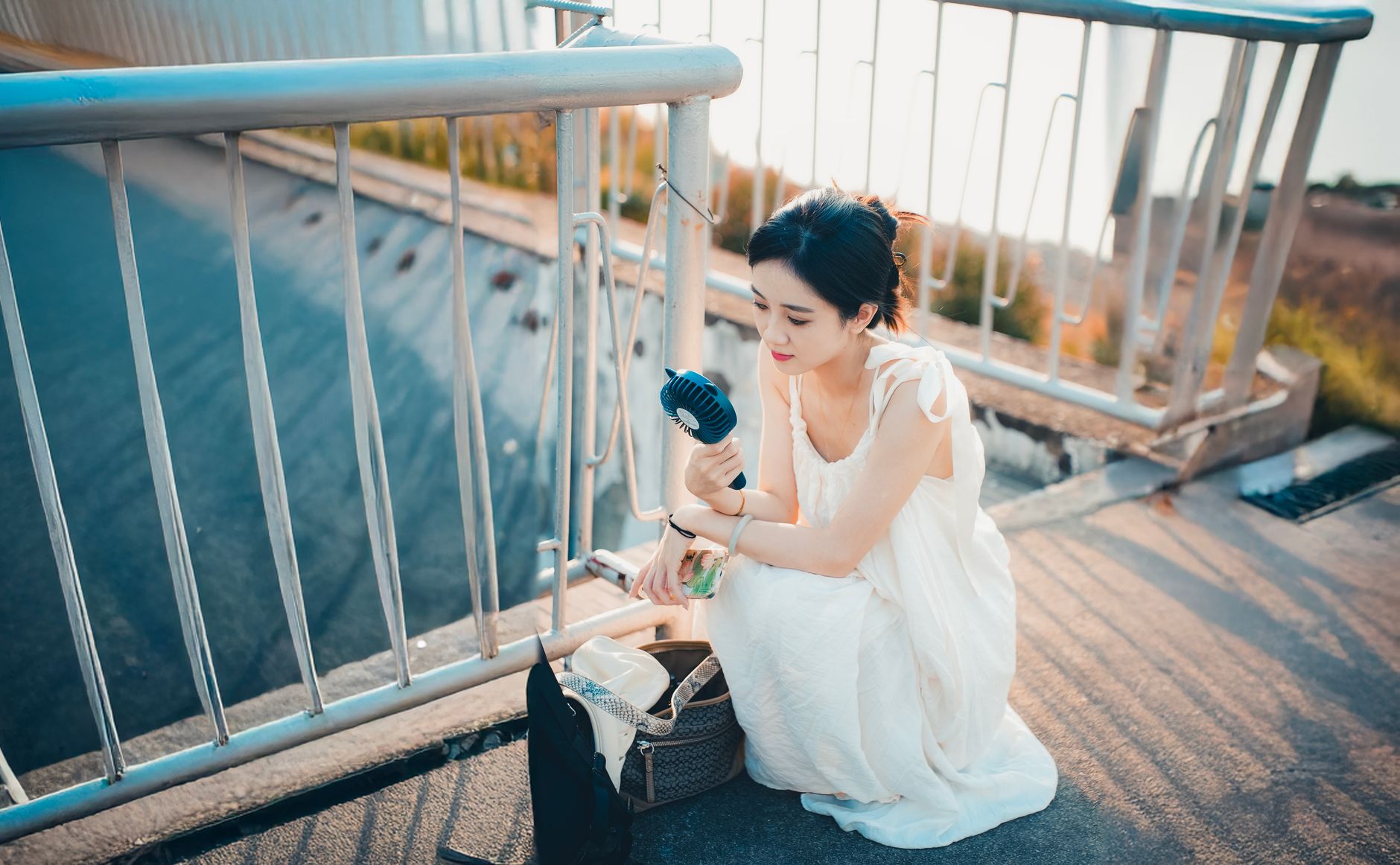
- Portable neck fan — looks silly, works beautifully. Every Korean person under 40 wears one. Buy one at any Daiso store for ₩5,000 (~$4) or any convenience store.
- Cooling towel — wet it, wring it, drape it around your neck. ₩3,000 (~$2) at CU or GS25 convenience stores.
- Collapsible umbrella — doubles as a parasol. Korean women use umbrellas for sun protection routinely; no one will look at you twice.
- Small backpack with water bottle — not a tote, not a crossbody. You want both hands free and weight on your back, not your shoulder.
What I wish I'd brought:
- Second pair of walking shoes — my feet sweat so much that one pair couldn't dry overnight. Alternating would have helped.
- Electrolyte packets — available at Korean pharmacies (약국, yak-guk) but easier to bring from home. The sweat loss is real.
7. Choose Your Destinations Strategically
Not all Korean destinations suffer equally in June. Coastal cities get sea breezes. Mountain towns sit at higher elevations. Some cities are concrete ovens.
June 2026 destination heat ranking (coolest to hottest):
| Destination | Avg June High | Why It Works / Doesn't |
|---|---|---|
| Pyeongchang / Gangwon highlands | 24–27°C (75–81°F) | Mountain elevation; cool nights; green season |
| Sokcho / East Coast | 25–28°C (77–82°F) | Ocean breeze; seafood town; beach access |
| Gyeongju | 28–31°C (82–88°F) | Hot midday but temples have shade and forests |
| Busan | 27–30°C (81–86°F) | Coastal breeze helps; beaches are the activity |
| Seoul | 28–33°C (82–91°F) | Worst heat island effect; but best infrastructure |
| Daegu | 30–35°C (86–95°F) | Notoriously the hottest city in Korea; avoid in June |
🏡 If you're basing yourself here for a few nights, Agoda tends to have the best rates for Korean guesthouses and business hotels — filter by 'free cancellation' to keep flexibility.
What Are the Real Costs of a Summer Korea Trip in 2026?
A comfortable summer trip to Korea in June 2026 costs roughly ₩200,000–350,000 ($145–255) per person per day for mid-range travelers, including accommodation, food, transport, and attractions. Summer is not peak pricing season — that's cherry blossom (April) and autumn foliage (October) — so you'll find slightly better hotel rates than spring.
Itemized Cost Breakdown (per person, per day, Seoul-based):
| Item | Detail | KRW | USD (approx) |
|---|---|---|---|
| Accommodation | 3-star hotel (double, split) | ₩60,000 | ~$44 |
| Breakfast | Convenience store or hotel | ₩5,000 | ~$4 |
| Lunch | Sit-down restaurant (naengmyeon, bibimbap) | ₩12,000 | ~$9 |
| Dinner | Korean BBQ or seafood | ₩25,000 | ~$18 |
| Transport | T-money subway/bus (daily) | ₩5,000 | ~$4 |
| Coffee / bingsu | Afternoon café break | ₩8,000 | ~$6 |
| Attractions | 1–2 paid sites | ₩10,000 | ~$7 |
| Cooling gear | Neck fan, towel, water | ₩8,000 | ~$6 |
| Daily Total | ₩133,000 | ~$97 |
Budget Tier Comparison (per person, per day):
| Comfortable | Premium | Splurge | |
|---|---|---|---|
| Per day | ₩130K–180K (~$95–130) | ₩250K–400K (~$180–290) | ₩600K+ (~$435+) |
| Stay | Clean 3-star hotel / hanok guesthouse | 4-star hotel with pool | 5-star (Josun Palace, Signiel) |
| Food | Sit-down local restaurants | Mix of traditional + modern dining | Michelin-starred + rooftop bars |
| Transport | Subway + occasional taxi | Taxi-heavy + KTX standard | KTX first class + private transfers |
| Cooling strategy | Portable fan + convenience store breaks | Hotel pool midday + spa visits | Spa suite + air-conditioned private tours |
🇰🇷 Useful Korean — Shopping for Summer Gear
- 이거 있어요? (i-geo i-sseo-yo?) — "Do you have this?" (show a photo)
- 카드 돼요? (ka-deu dwae-yo?) — "Do you accept card?"
- 얼마예요? (eol-ma-ye-yo?) — "How much is it?"
- 감사합니다 (gam-sa-ham-ni-da) — "Thank you"
What Should You Avoid During Korea's June Heat?
The Honest Downside
I need to be straight with you about a few things that no amount of strategy fully fixes.
The humidity is inescapable outdoors after noon. Even with the best gear and scheduling, if you have a midday outdoor commitment — a guided tour, a ferry departure, a specific temple ceremony — you will be uncomfortable. There's no cute hack for 82% humidity at 2 p.m. Accept it, dress for it, and don't stack two outdoor activities back-to-back in the 11 a.m.–3 p.m. window.
Your camera lens will fog. This drove me crazy. Every time I walked from an air-conditioned space into the outdoor heat, my camera lens and phone camera fogged up for 3–5 minutes. Condensation on electronics is a real issue. I started keeping my phone in my pocket (body temperature) before stepping outside to reduce the shock. A lens cloth is essential.
Some outdoor attractions are genuinely miserable in June. I'll name names: the Haneul Park Sky Trail (Mapo-gu, Seoul) — beautiful elevated walkway with zero shade, fully exposed to sun, and the metal railing gets burning hot. Skip it until October. Suwon Hwaseong Fortress wall walk — stunning fortification, but the full circuit is 5.7 km with minimal shade. If you must go, do the short northern section only and start at 8 a.m.
Dehydration sneaks up on you. You don't feel thirsty in the same way because the humidity tricks your body. I got a headache on day three that I initially blamed on jet lag — it was dehydration. Carry a water bottle and actually drink from it every 20 minutes, even if you don't feel thirsty.
How Long Do You Need to Adjust to Korea's Summer Heat?
Most travelers need about 2–3 full days to acclimatize to Korea's June humidity, especially coming from drier or air-conditioned Western environments. Plan your first two days with a lighter itinerary — 2–3 attractions maximum — and build up from there.
I made the mistake of scheduling Bukchon Hanok Village, Gyeongbokgung, AND Insadong on day one. By 1 p.m. I was dizzy, my shirt was soaked through, and I sat in a convenience store drinking Pocari Sweat (Korea's version of Gatorade, ₩1,500 / ~$1.10) for 30 minutes. On day three, my body had adjusted and I could handle a full day with smart breaks.
Day 1–2 strategy:
- Morning outdoor activity (1 site)
- Long air-conditioned lunch
- Afternoon museum or indoor attraction
- Evening walk when temps drop
Day 3+ strategy:
- Extended morning outdoor window (2 sites before 11 a.m.)
- Indoor midday break
- Late afternoon second outdoor window
- Night market or riverside evening

Is Korea Worth Visiting in Summer 2026?
Yes — Korea in June 2026 is absolutely worth visiting if you plan around the heat rather than fighting it. Hotel prices are 15–25% lower than peak cherry blossom season, crowds at major palaces are thinner on weekdays, and the lush green landscape of Korean mountains in early summer is genuinely beautiful in a way autumn gets all the credit for.
The smell of Korea in summer is something I didn't expect to love. The wet stone of temple courtyards after a brief rain. Grilled squid smoke drifting from pojangmacha (street tent bars) along the Han River at dusk. The sharp clean scent of pine on a mountain trail at 7 a.m. before the heat arrives. These are sensory memories that winter and autumn Korea simply can't offer.
Summer also means summer-only experiences:
- Boryeong Mud Festival (mid-July, but late June events begin building up)
- Busan beach season — Haeundae and Gwangalli beaches open for swimming in late June
- Firefly festivals in Muju (late June through July)
- Valley camping — Korean families set up along mountain streams; you can join with day-trip gear
The honest calculus: if you can tolerate humidity and you're willing to shift your schedule by 2–3 hours earlier than you'd normally vacation, Korea in June offers 85% of the experience at 70% of the cost and crowds of peak season.
Practical Tips & Warnings for Summer Korea Travel
Summer travel in Korea requires specific preparation that other seasons don't. These tips come from actual June 2026 conditions, not generic travel advice.
1. Get a T-money card and load it immediately.
You can buy one at any convenience store (₩2,500 for the card, ~$1.80) and load it with cash or use a linked credit card. The subway is air-conditioned and becomes your primary mode of transport in summer — taxis in traffic with broken AC are a nightmare.
2. Download Naver Map, not Google Maps.
Google Maps works poorly in Korea for transit directions, walking paths, and especially bus routes. Naver Map (available in English) gives you accurate subway transfers, bus arrival times, and even indoor navigation for malls. As of June 2026, the English interface has improved significantly.
3. Convenience stores are your cooling stations.
CU, GS25, 7-Eleven, and Emart24 are everywhere — often every 50–100 meters in commercial areas. They're air-conditioned, have cold drinks (iced Americano for ₩1,500 / ~$1.10), seating areas, and clean bathrooms. I used them as 10-minute recharge stops between outdoor sites.
4. Carry a small towel at all times.
Koreans carry hand towels (son-su-geon) year-round but especially in summer. A microfiber towel from Daiso (₩3,000 / ~$2) will save you from the indignity of wiping sweat with your sleeve in a restaurant.
5. Watch out for the monsoon transition.
The 2026 jangma (monsoon season) is forecast to begin affecting the central region around late June. If you're traveling June 20–30, pack a proper rain jacket (not just an umbrella) and waterproof bag covers. When it rains during monsoon, it's not drizzle — it's heavy, persistent, and can last 2–3 days.
6. Sunscreen is cheaper in Korea.
Korea is obsessed with sun protection. You'll find high-quality SPF 50+ sunscreen at Olive Young stores everywhere for ₩8,000–15,000 (~$6–11). Korean formulations tend to be lighter and less greasy than Western brands — great for humid conditions. The brand Roundlab Birch Juice is a local favorite that won't make you look ghostly.
7. Pharmacies (약국) are easy to find.
They have a green cross sign. Pharmacists in tourist areas often speak basic English. For heat-related issues, ask for:
- 두통약 (du-tong-yak) — headache medicine
- 소화제 (so-hwa-je) — digestive medicine (helpful when cold noodles hit differently)
- Electrolyte drinks are at any convenience store (Pocari Sweat, Ion drink)
🇰🇷 Useful Korean — Getting Help
- 약국 어디예요? (yak-guk eo-di-ye-yo?) — "Where is the pharmacy?"
- 여기 가 주세요 (yeo-gi ga ju-se-yo) — "Please take me here" (show map to taxi driver)
- 천천히 말해 주세요 (cheon-cheon-hi mal-hae ju-se-yo) — "Please speak slowly"
- 괜찮아요 (gwaen-cha-na-yo) — "It's okay / No problem"🎵 If you want the atmosphere before you arrive, GrooveSeoul Studio curates drive and scenic playlists from Seoul, Busan, and beyond.
⚠️ Book ahead: If you're visiting Bukhansan or Seoraksan National Parks on a weekend in June, reserve your hiking slot at least 3–5 days in advance through reservation.knps.or.kr. Weekend morning slots (before 9 a.m.) fill up fast in summer as Koreans escape the city heat.
✅ Trip Checklist for Summer Korea 2026
- [ ] Moisture-wicking shirts (3–4 minimum for a week)
- [ ] Portable neck fan or handheld fan (buy at Daiso or bring from home)
- [ ] Collapsible umbrella (rain + sun dual use)
- [ ] Microfiber cooling towel
- [ ] Electrolyte packets or plan to buy Pocari Sweat on arrival
- [ ] Download Naver Map app (set to English)
- [ ] T-money card (buy at airport convenience store on arrival)
- [ ] Sunscreen SPF 50+ (or buy at Olive Young upon arrival)
- [ ] Rain jacket (especially if traveling late June)
- [ ] Reserve national park hiking slots if applicable
FAQ
Q: Is June a good time to visit Korea?
A: Yes, June is a solid time if you plan around the heat. Early June (before ~June 20) offers warm but manageable weather, lower hotel prices than spring peak, and green mountain landscapes. Late June edges into monsoon territory with heavier rain.
Q: How hot does Korea get in June 2026?
A: Seoul averages 28–33°C (82–91°F) in June 2026, with real-feel temperatures reaching 36°C+ due to humidity. Coastal cities like Busan run 2–3°C cooler, and mountain areas like Pyeongchang are 5–8°C cooler than Seoul.
Q: What should I wear in Korea in summer?
A: Light, moisture-wicking fabrics — avoid cotton. Breathable walking shoes (not sandals for heavy sightseeing), a hat or umbrella for sun, and bring a light layer for aggressive indoor air conditioning. Korean fashion leans modest; tank tops are fine but very short shorts stand out more than in Western countries.
Q: Is the monsoon season in June or July?
A: The monsoon (jangma) typically starts in late June and runs through mid-to-late July. In 2026, the Korea Meteorological Administration forecasts the monsoon front reaching central Korea around June 25–28. Early June usually stays dry.
Q: Can I still enjoy outdoor attractions in Korean summer?
A: Absolutely — just shift your schedule. Outdoor sites are best before 10 a.m. and after 4 p.m. Midday hours (11 a.m.–3 p.m.) should be reserved for indoor activities like museums, underground malls, jjimjilbangs, or long restaurant meals.
Q: Do Korean restaurants have air conditioning?
A: Nearly all sit-down restaurants have air conditioning, and it's typically set quite cold (20–22°C). Street food stalls and open-air market vendors do not. This is another reason to prioritize sit-down meals over street food grazing in peak heat hours.
Q: Is it cheaper to visit Korea in summer than spring?
A: Generally yes. Hotel rates in June are 15–25% lower than peak cherry blossom season (April) and autumn foliage (October). Flights also tend to be slightly cheaper in June compared to Korean holiday periods. The exception is late July–August when Korean domestic tourism peaks.
Related Posts
이미지 출처: Photo by Junsu Park on Pexels | Photo by jason hu on Pexels | Photo by Theodore Nguyen on Pexels | Photo by 성두 홍 on Pexels


0 Comments