この話題を日本語で読む: ソウル格安旅行2026|3泊4日で実際いくらかかった?
Why Seoul in Summer 2026 Is the Best Budget Trip You'll Take This Year
I'll be honest — I almost didn't plan a summer Seoul trip. Everyone told me June and July would be humid, sticky, and miserable. And yes, stepping out of Incheon Airport in mid-June felt like walking into a warm towel. But here's what nobody told me: Seoul in summer is absurdly affordable, surprisingly uncrowded compared to cherry blossom and autumn foliage seasons, and the city basically transforms into an outdoor festival ground that runs until midnight.
What I didn't expect was how many genuinely excellent things cost absolutely nothing. Free palace admissions if you wear hanbok. Free riverside parks with swimming pools. Free outdoor movie screenings along the Han River. Street food that fills you up for ₩5,000 ($3.60). I spent five full days in Seoul in early June 2026 and my total spend — excluding flights and accommodation — came to roughly ₩280,000 ($204). That's about ₩56,000 ($41) per day for a packed itinerary that never felt like I was cutting corners.

The trick to enjoying Seoul cheaply in summer isn't about suffering through heat in free parks. It's about knowing which air-conditioned museums are free, which neighborhoods come alive after sunset when the temperature drops, and which food markets give you the best bang for your won. If you're planning a Korea trip in 2026, especially between June and August, this guide covers everything I actually did, what it cost, and where I'd skip if I had to do it again. No fluff, no generic "visit Myeongdong" advice — just the stuff that genuinely made the trip memorable without emptying my wallet.
Overview: Seoul in Summer — What to Expect in 2026
Seoul sits in the northern part of South Korea, surrounded by mountains with the Han River cutting through the city center. Summer officially runs from June through August, with monsoon season (called jangma) typically hitting mid-June through mid-July 2026. That sounds scary, but in practice it means intermittent heavy rain showers — not all-day downpours. You get maybe 2–3 hours of rain, then it clears up, the air smells incredible, and the city glistens.
Temperatures in June 2026 are hovering around 24–30°C (75–86°F), climbing to 28–35°C (82–95°F) by late July and August. Humidity is the real challenge — it sits around 70–80%. But here's the secret: nearly every building, subway car, and convenience store in Seoul blasts air conditioning so aggressively you'll want a light cardigan.
Getting to Seoul from abroad: Incheon International Airport (ICN) connects to Seoul Station via the AREX express train in 43 minutes for ₩9,500 ($6.90). Gimpo Airport (GMP) is even closer — 20 minutes to central Seoul via subway.
Getting around Seoul: The subway system is world-class, air-conditioned, and cheap. A single ride costs ₩1,400–₩1,600 ($1.00–$1.15) depending on distance. Get a T-money card at any convenience store for ₩2,500 ($1.80) and top it up as needed. Taxis start at ₩4,800 ($3.50) as of 2026 and are metered and honest.
Rough daily budget for comfortable summer travel: You can genuinely enjoy Seoul on ₩50,000–₩80,000 ($36–$58) per day if you're strategic. That covers transport, three meals, a couple of attractions, and snacks.
🎟️ Pre-book this activity on Klook. Prices are competitive and cancellation is usually flexible.
Best Time to Visit Seoul in Summer 2026
| Season Window | Crowds | Weather | Notes |
|---|---|---|---|
| Early June (Jun 1–15) | Moderate | 24–29°C, pre-monsoon, pleasant | Best window — warm but not brutal |
| Late June–Mid July | Low–Moderate | 26–32°C, monsoon rains | Carry an umbrella, fewer tourists |
| Late July–Mid Aug | Higher (Korean vacation) | 30–35°C, peak humidity | Koreans on holiday, busier everywhere |
| Late August | Moderate | 28–32°C, humidity easing | Monsoon ending, good last-chance window |
✅ For tours and day trips around this area, Klook has a solid selection with English guides available.
💡 Pro Tip: Early to mid-June is the sweet spot — the weather is warm without being brutal, monsoon hasn't started in earnest, and you'll have popular spots like Bukchon Hanok Village practically to yourself on weekday mornings.
What Is Seoul Known for in Summer?
Seoul in summer is known for its vibrant night markets, outdoor Han River culture, monsoon-season cafe culture, and free cultural events. The city hosts the Seoul Bamdokkaebi Night Market along the riverside, free outdoor concerts at Seoul Plaza, and dozens of temporary water parks and splash zones. Korean summer food — cold noodles (naengmyeon), shaved ice (bingsu), and iced Americanos — becomes a way of life. The blend of ultra-modern air-conditioned spaces with traditional palace grounds creates a rhythm of cooling off indoors and exploring outdoors that feels uniquely Seoul.
🎧 Good background for trip planning — GrooveSeoul Studio posts café ambience and night-view footage from across Korea. Worth bookmarking.
Itinerary: 25+ Cheap Things to Do in Seoul Summer 2026
Morning Activities (Beat the Heat)
1. Gyeongbokgung Palace — Free with Hanbok
This is the big one, and it's completely free if you rent a hanbok (traditional Korean dress). Hanbok rental shops line the streets around the palace — expect to pay ₩15,000–₩20,000 ($11–$15) for a 2-hour rental. But the palace admission itself (normally ₩3,000 / $2.20) is waived entirely when you're wearing one. Get there by 9:30 AM to catch the Royal Guard Changing Ceremony — it's dramatic, photogenic, and free.
📍 Address: 161 Sajik-ro, Jongno-gu, Seoul
📍 View on Google Maps
🚇 Getting there: Line 3, Gyeongbokgung Station Exit 5 (3 min walk)
⏱️ Time needed: 2–2.5 hours
💴 Admission: ₩3,000 (~$2.20) or FREE with hanbok rental
Personally, I went at 9 AM on a Tuesday and had entire courtyards to myself. By 11 AM it was crowded and hot. Morning is non-negotiable here in summer.
2. Bukchon Hanok Village (Free)
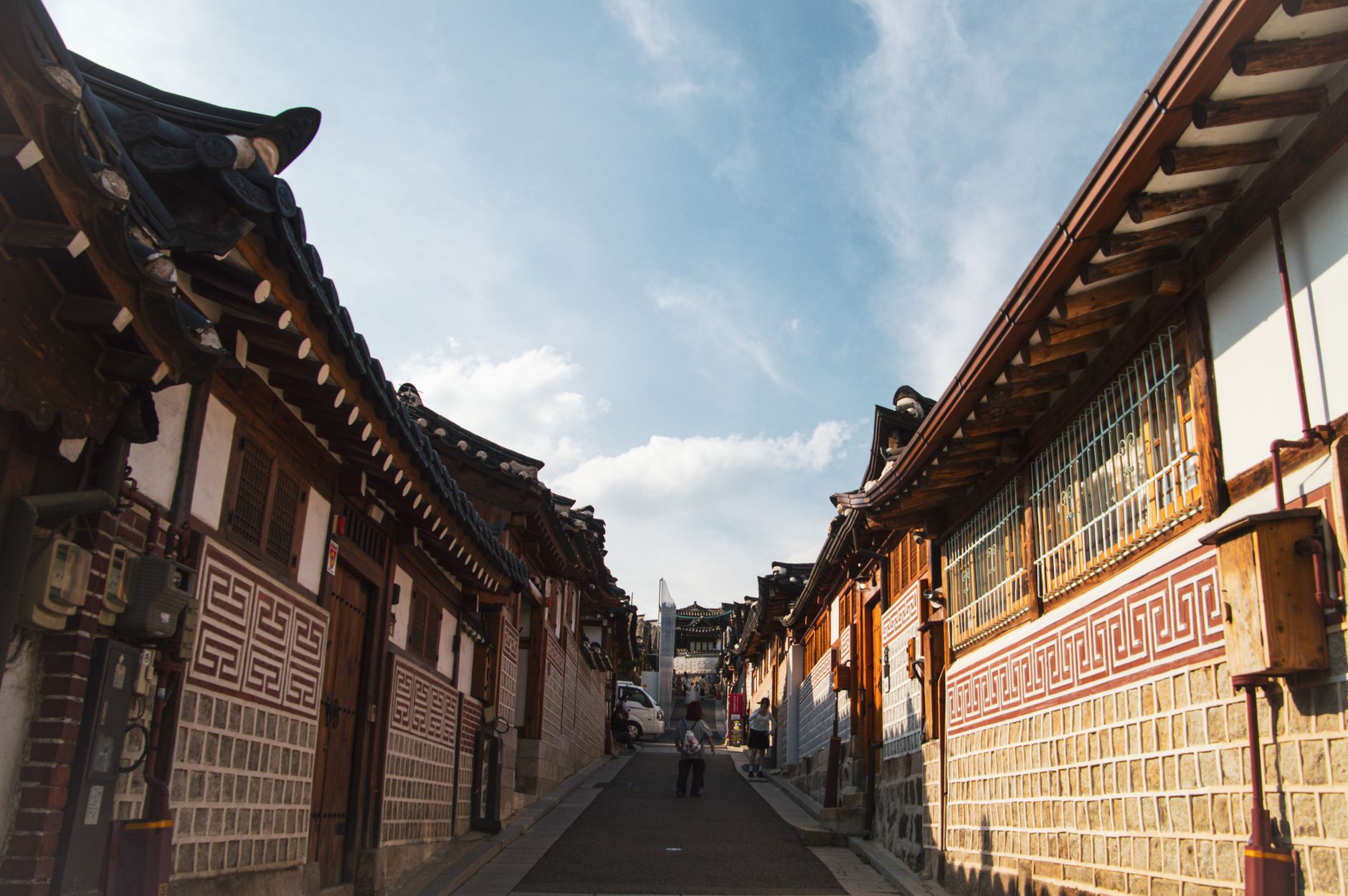
A 10-minute walk from Gyeongbokgung, this hillside neighborhood of traditional Korean houses is free to explore. The iconic "8 scenic viewpoints" are signposted. Be respectful — people actually live here. Keep voices down, especially on the narrow residential lanes.
📍 Address: Bukchon-ro, Jongno-gu, Seoul
📍 View on Google Maps
🚇 Getting there: Line 3, Anguk Station Exit 2 (5 min walk)
⏱️ Time needed: 1–1.5 hours
💴 Admission: Free
The uphill walking is moderate but real — maybe 15–20 minutes of incline. There are benches and a couple of cafes along the route where you can rest with a cold drink for ₩5,000–₩7,000 ($3.60–$5.10).
3. National Museum of Korea (Free)
One of the best free museums in all of Asia. The permanent collection covers 5,000 years of Korean history across six floors. The building is massive, modern, and beautifully air-conditioned — this is your heat escape when it's 33°C outside. I spent a leisurely 2.5 hours here and didn't see everything.
📍 Address: 137 Seobinggo-ro, Yongsan-gu, Seoul
📍 View on Google Maps
🚇 Getting there: Line 4, Ichon Station Exit 2 (connected via underground passage)
⏱️ Time needed: 2–3 hours
💴 Admission: Free (special exhibitions ₩5,000–₩10,000)
🇰🇷 Useful Korean — At Museums & Cultural Sites
- 안녕하세요 (an-nyeong-ha-se-yo) — "Hello / Good day"
- 사진 찍어도 돼요? (sa-jin jji-geo-do dwae-yo?) — "May I take a photo?"
- 화장실 어디예요? (hwa-jang-sil eo-di-ye-yo?) — "Where is the restroom?"
- 감사합니다 (gam-sa-ham-ni-da) — "Thank you (formal)"
4. Jogyesa Temple (Free)
Seoul's chief Buddhist temple sits right in the downtown area and is always free to enter. In June, the lotus lanterns from Buddha's Birthday (May) are sometimes still hanging, creating a canopy of color. The temple grounds are quiet, shaded, and a genuine pocket of calm in the middle of the city.
📍 Address: 55 Ujeongguk-ro, Jongno-gu, Seoul
📍 View on Google Maps
🚇 Getting there: Line 1, Jonggak Station Exit 2 (5 min walk)
⏱️ Time needed: 30–45 minutes
💴 Admission: Free
Afternoon Activities (Indoor Escapes & Food)
5. Gwangjang Market — Eat Like a Local for Under ₩10,000
This is where Seoul food culture gets real. Gwangjang Market has been running since 1905, and the food stalls inside are legendary. Sit at the counter, point at what looks good, and eat. My favorites:
- Bindaetteok (mung bean pancake): ₩4,000 ($2.90)
- Mayak gimbap (mini seaweed rice rolls): ₩3,500 ($2.55)
- Yukhoe (Korean beef tartare): ₩15,000 ($10.90) — a splurge but worth it
- Tteokbokki (spicy rice cakes): ₩4,000 ($2.90)
You can eat an absurdly satisfying lunch here for ₩8,000–₩12,000 ($5.80–$8.70).
📍 Address: 88 Changgyeonggung-ro, Jongno-gu, Seoul
📍 View on Google Maps
🚇 Getting there: Line 1, Jongno 5-ga Station Exit 8 (2 min walk)
⏱️ Time needed: 1–1.5 hours
💴 Cost: ₩8,000–₩15,000 for a full meal

🇰🇷 Useful Korean — Ordering Food
- 이거 주세요 (i-geo ju-se-yo) — "This one, please" (point at menu or dish)
- 덜 맵게 해 주세요 (deol maep-ge hae ju-se-yo) — "Less spicy, please"
- 물 주세요 (mul ju-se-yo) — "Water, please"
- 맛있다! (ma-sit-da!) — "This is delicious!"
- 얼마예요? (eol-ma-ye-yo?) — "How much is it?"
6. Dongdaemun Design Plaza — DDP (Free)
Zaha Hadid's iconic curving building is free to walk through and around. The exterior is especially stunning at night when LED roses light up the plaza. Inside, there are free exhibitions rotating throughout summer 2026. Air-conditioned, architecturally mind-blowing, and a great photo op.
📍 Address: 281 Eulji-ro, Jung-gu, Seoul
📍 View on Google Maps
🚇 Getting there: Line 2/4/5, Dongdaemun History & Culture Park Station Exit 1
⏱️ Time needed: 45 min–1.5 hours
💴 Admission: Free (some exhibitions charge ₩5,000–₩12,000)
7. Ihwa Mural Village (Free)
A hillside neighborhood covered in street art. The murals change periodically, and the walk up from Hyehwa Station offers panoramic views of Jongno-gu. It's steep — about 10–15 minutes of uphill walking — but there are cafes at the top where you can cool down. Best in the late afternoon when the light is golden and the heat starts to fade.
📍 Address: Naksan 4-gil, Jongno-gu, Seoul
📍 View on Google Maps
🚇 Getting there: Line 4, Hyehwa Station Exit 2 (10 min walk uphill)
⏱️ Time needed: 1–1.5 hours
💴 Admission: Free
8. Lotte World Mall / COEX Mall — Free Air-Conditioned Wandering
Let me be honest: sometimes you just need to escape the humidity. Both Lotte World Mall (Jamsil) and COEX Mall (Samseong) are massive, free to enter, and cooled to perfection. COEX has the famous Starfield Library — that Instagram-worthy wall of books you've seen online. It's free and genuinely impressive in person. Both malls have food courts with meals from ₩8,000–₩15,000 ($5.80–$10.90).
🛏️ Still looking for somewhere to sleep? Agoda has solid options across all price ranges, with free cancellation on most bookings.
Evening & Night Activities (When Seoul Really Shines)
9. Hangang River Parks — Free Swimming Pools & Picnics
This was the highlight of my trip. Seoul operates free or nearly-free outdoor swimming pools at several Han River parks every summer. In 2026, the Ttukseom, Yeouido, and Jamwon Hangang Parks all have pools open from late June through August. Admission is typically ₩5,000 ($3.60) for adults as of 2026.
Even if you don't swim, the riverside parks are magical at sunset. Grab fried chicken and beer from a convenience store (₩10,000–₩15,000 for both / $7.30–$10.90), spread out a mat on the grass, and join hundreds of Seoulites doing exactly the same thing. You can rent mats from CU or GS25 convenience stores right in the park.
📍 Address: Yeouido Hangang Park, 330 Yeouidong-ro, Yeongdeungpo-gu
📍 View on Google Maps
🚇 Getting there: Line 5, Yeouinaru Station Exit 3 (5 min walk)
⏱️ Time needed: 2–4 hours (it's a whole evening activity)
💴 Cost: Free for park; ₩5,000 (~$3.60) for pool; snacks extra
10. Bamdokkaebi Night Market (Free Entry)
Seoul's beloved night market runs on weekends from spring through October along the Han River at several locations including Yeouido, DDP, and Banpo. Food trucks, handmade crafts, live music, and a festive atmosphere. Most food items run ₩5,000–₩10,000 ($3.60–$7.30). Check the 2026 schedule on the official Seoul Bamdokkaebi website — locations rotate.
11. Namsan Tower at Night (Budget Option)
You don't need to pay for the observation deck (₩16,000 / $11.60) to enjoy Namsan. Walk up the mountain path from Myeongdong (about 30–40 minutes, well-lit at night) or take the Namsan Circulation Bus #02 for ₩1,200 ($0.87). The outdoor viewing area near the tower base is free and gives you a 270-degree panorama of Seoul at night. I found this almost better than the indoor deck — no glass reflections, and you can feel the mountain breeze.
📍 Address: 105 Namsangongwon-gil, Yongsan-gu, Seoul
📍 View on Google Maps
🚇 Getting there: Line 4, Myeongdong Station Exit 3, then walk or bus
⏱️ Time needed: 1.5–2 hours including the walk up
💴 Cost: Free (outdoor area) / ₩16,000 for tower deck
12. Cheonggyecheon Stream Night Walk (Free)
A 10.9 km restored stream running through downtown Seoul. At night, sections are lit up with colored lights. Start at Cheonggye Plaza near City Hall and walk as far as you like — even 20 minutes along the stream is peaceful and photogenic. Completely flat, well-maintained, and cooler than street level because you're walking below road grade.
13. Hongdae Busking & Street Culture (Free)
Hongdae's main street (near Exit 9 of Hongik University Station) comes alive every evening with buskers, dance crews, and street performers. Friday and Saturday nights are the most energetic. Grab a ₩2,000 ($1.45) soft-serve ice cream from a street vendor and just wander. The energy is infectious, and it costs nothing to watch.
Day Trip Additions (Still Cheap)
14. Bukhansan National Park — Free Hiking
One of the world's most-visited national parks is literally inside Seoul city limits. Entry is free. The Bukhansanseong trail is the most popular and takes about 3–4 hours round trip to the peak. Bring at least 1.5 liters of water per person in summer — there are no vendors on the mountain. Start early (before 8 AM) to avoid the worst heat.
📍 Address: Bukhansan-ro, Gangbuk-gu, Seoul
📍 View on Google Maps
🚇 Getting there: Line 3, Gupabal Station Exit 1, then bus #704
⏱️ Time needed: 3–5 hours
💴 Admission: Free
15. War Memorial of Korea (Free)
Another world-class free museum. The outdoor exhibit of tanks, planes, and naval vessels is impressive, but the indoor galleries covering the Korean War are deeply moving and educational. Easily 2–3 hours of content. Air-conditioned, thoughtfully designed, and provides essential context for understanding modern Korea.
📍 Address: 29 Itaewon-ro, Yongsan-gu, Seoul
📍 View on Google Maps
🚇 Getting there: Line 4/6, Samgakji Station Exit 12 (1 min walk)
⏱️ Time needed: 2–3 hours
💴 Admission: Free
16–25: Quick-Hit Cheap Activities
| # | Activity | Cost | Best For |
|---|---|---|---|
| 16 | Noryangjin Fish Market — watch the auctions, eat fresh sashimi | ₩15,000–₩25,000 | Foodies, couples |
| 17 | Seoul City Wall Walk — free trail tracing the old fortress | Free | Active mornings |
| 18 | Ikseon-dong Hanok Alley — trendy cafes in traditional houses | ₩5,000–₩8,000 (drink) | Afternoon coffee break |
| 19 | Bongeunsa Temple — free Buddhist temple near COEX | Free | Cultural immersion |
| 20 | Seoul Museum of Art (SeMA) — free permanent collection | Free | Art lovers |
| 21 | Mangwon Market — local market, cheaper than Gwangjang | ₩5,000–₩10,000 | Authentic local food |
| 22 | Seonyudo Park — island park on the Han River | Free | Quiet afternoon escape |
| 23 | Banpo Bridge Rainbow Fountain — free water show at night | Free | Evening entertainment |
| 24 | Naksan Park — free hilltop park with city wall and night views | Free | Sunset photos |
| 25 | Korean jjimjilbang (public bath) — Dragon Hill Spa or Siloam | ₩12,000–₩18,000 | Rainy day relaxation |

Real Cost Breakdown: My 5-Day Seoul Summer Trip (June 2026)
Itemized Daily Expenses
| Item | Detail | KRW | USD (approx) |
|---|---|---|---|
| Transport | T-money subway + bus (per day) | ₩7,000 | ~$5.10 |
| Breakfast | Convenience store kimbap + coffee | ₩4,500 | ~$3.30 |
| Lunch | Market food or casual restaurant | ₩9,000 | ~$6.55 |
| Dinner | Sit-down restaurant or BBQ splurge | ₩15,000 | ~$10.90 |
| Snacks & drinks | Bingsu, iced coffee, ice cream | ₩7,000 | ~$5.10 |
| Attractions | Average per day (many free) | ₩5,000 | ~$3.65 |
| Misc | Sunscreen, umbrella, phone charger | ₩3,000 | ~$2.20 |
| Daily Total | ₩50,500 | ~$36.80 |
5-Day Trip Total
| Item | Detail | KRW | USD (approx) |
|---|---|---|---|
| Transport | AREX + 5 days subway/bus | ₩54,500 | ~$40 |
| Accommodation | Guesthouse 5 nights @ ₩55,000 | ₩275,000 | ~$200 |
| Food | All meals + snacks 5 days | ₩177,500 | ~$129 |
| Attractions | Hanbok rental + pool + temple stay | ₩35,000 | ~$25 |
| Misc | SIM card + misc purchases | ₩30,000 | ~$22 |
| Total | 5 days all-in (excl. flights) | ₩572,000 | ~$416 |
Budget Tier Comparison (Per Day, Summer 2026)
| Comfortable | Premium | Splurge | |
|---|---|---|---|
| Per day | ₩70K–120K (~$51–87) | ₩200K–350K (~$145–255) | ₩500K+ (~$365+) |
| Stay | Clean guesthouse / 2-star hotel | 3–4 star hotel (Myeongdong, Hongdae) | Boutique / 5-star (Josun Palace, Signiel) |
| Food | Markets + casual restaurants | Sit-down Korean BBQ + cafes | Fine dining + rooftop bars |
| Transport | Subway + occasional bus | Subway + taxi after dark | Private car / taxi everywhere |
| Activities | Free museums + parks + markets | Paid exhibits + cooking classes | Private tours + spa packages |
🇰🇷 Useful Korean — Getting Around
- 여기 가 주세요 (yeo-gi ga ju-se-yo) — "Please take me here" (show address to taxi driver)
- 천천히 말해 주세요 (cheon-cheon-hi mal-hae ju-se-yo) — "Please speak slowly"
- 카드 돼요? (ka-deu dwae-yo?) — "Do you accept card?"
- 감사합니다 (gam-sa-ham-ni-da) — "Thank you (formal)"
Practical Tips & Warnings for Summer Seoul 2026
1. The T-money Card Is Non-Negotiable
Buy a T-money card at any GS25, CU, or 7-Eleven for ₩2,500 ($1.80) and load it with ₩20,000–₩30,000 to start. It works on every subway, bus, and even some taxis. You get a ₩100 discount per ride versus buying single tickets, and transfers within 30 minutes are free. As of 2026, Apple Pay and Samsung Pay also work on Seoul transit if your phone supports Korean NFC transit — but the physical card is more reliable.
2. Carry a Small Umbrella and Towel
Monsoon season (mid-June to mid-July) means sudden downpours. I got caught in three during my trip. A compact umbrella saved me every time. The small hand towel (son-su-geon) is a Korean essential — everyone carries one for sweat. You can buy both at Daiso for ₩2,000 total ($1.45).
3. Convenience Stores Are Your Best Friend
Korean convenience stores are not like Western ones. GS25, CU, and 7-Eleven sell full meals — triangle kimbap (₩1,500 / $1.09), cup ramyeon with hot water stations (₩1,500 / $1.09), iced Americanos (₩1,800 / $1.31), and even beer and fried chicken. Honestly, I ate breakfast at convenience stores every single day and it was perfectly satisfying.
4. Credit Cards Work Almost Everywhere
As of 2026, Seoul is extremely card-friendly. Visa and Mastercard are accepted at virtually every restaurant, convenience store, and attraction. The exceptions: some traditional market stalls and very small food vendors. Carry ₩30,000–₩50,000 ($22–$36) in cash as backup, but you won't need much.
5. Download Naver Map, Not Google Maps
Google Maps is borderline useless in Korea — transit directions are inaccurate and many businesses don't show up. Naver Map (available in English) is what Koreans actually use and it's dramatically better for navigation, bus routes, and restaurant finding. Download it before you arrive.
6. Shoes Off Indoors — Always
This catches many first-time visitors off guard. You remove shoes when entering Korean homes, many restaurants (especially traditional ones with floor seating), temples, and guesthouses. Look for a shoe rack or a raised platform at the entrance — that's your cue. Wear shoes that are easy to slip on and off.
7. Sunscreen and Hydration Are Serious
Korean summer sun is strong, and the humidity makes dehydration sneak up on you. I made the mistake of doing Bukhansan without enough water on my second day and felt genuinely unwell by noon. Carry a water bottle, refill at subway station water fountains (they're clean and filtered), and apply sunscreen every 2 hours.
How Long Do You Need in Seoul?
Three to five days is the sweet spot for most travelers. Three days covers the major palaces, a market or two, Namsan Tower, and the Han River. Five days lets you add day trips (like Bukhansan hiking or a DMZ tour), explore neighborhoods at a relaxed pace, and revisit favorite food spots. I personally think five days is ideal, especially in summer when the heat makes you naturally pace yourself — you'll do mornings and evenings, with air-conditioned afternoons in between.
✅ Trip Checklist: Seoul Summer 2026
- [ ] T-money card — buy at any convenience store upon arrival (₩2,500)
- [ ] Naver Map app downloaded with English setting enabled
- [ ] Compact umbrella — essential for monsoon season (June–July)
- [ ] Small hand towel — pick one up at Daiso for ₩1,000
- [ ] Sunscreen SPF 50+ — reapply every 2 hours outdoors
- [ ] Light cardigan or long sleeve — AC indoors is aggressive
- [ ] Portable battery pack — your phone is your map, translator, and payment device
- [ ] Cash backup — ₩30,000–₩50,000 for market stalls and small vendors
- [ ] Slip-on shoes — you'll remove them 5+ times per day
- [ ] Reusable water bottle — refill at subway stations and parks
FAQ: Cheap Things to Do in Seoul Summer 2026
Q: Is Seoul actually cheap for tourists in 2026?
A: Compared to Tokyo or Singapore, absolutely. Seoul's public transport is among the cheapest in Asia, street food is filling for ₩5,000–₩10,000 ($3.60–$7.30), and many of the city's best attractions are free. You can have a genuinely excellent day in Seoul for ₩50,000–₩70,000 ($36–$51).
Q: Is Seoul worth visiting in summer?
A: Yes, with caveats. The humidity is real, and monsoon rain can disrupt outdoor plans. But summer brings free riverside events, fewer tourists than spring/autumn, longer daylight hours, and Seoul's vibrant night culture at its peak. Pack an umbrella and embrace the rhythm of indoor/outdoor activities.
Q: How much does a meal cost in Seoul in 2026?
A: A convenience store meal runs ₩3,000–₩5,000 ($2.20–$3.65). Market food: ₩5,000–₩12,000 ($3.65–$8.70). A casual sit-down restaurant: ₩9,000–₩15,000 ($6.55–$10.90). Korean BBQ for two: ₩30,000–₩50,000 ($22–$36) total.
Q: Do I need to speak Korean to get around Seoul?
A: No. Seoul's subway system has full English signage and announcements. Most restaurant menus in tourist areas have photos or English translations. Younger Koreans often speak conversational English. That said, learning 5–10 basic Korean phrases dramatically improves your experience — especially at markets and local restaurants.
📚 For deeper planning, there are some solid Korea travel guides on Amazon — Lonely Planet Korea is the standard, but the Time Out Seoul guide is better for food and nightlife.
Q: What's the best neighborhood to stay in Seoul on a budget?
A: Hongdae offers the best balance of budget accommodation, food variety, nightlife, and transit access. Guesthouse rooms run ₩45,000–₩65,000 ($33–$47) per night for a private room in 2026. Myeongdong is pricier but ultra-central. Jongno/Insadong is great for cultural access — close to palaces and traditional areas.
Q: Is the Seoul Metro air-conditioned in summer?
A: Yes, aggressively so. Both the stations and trains are well air-conditioned. Honestly, the subway becomes your best friend on 33°C days — I sometimes rode a few extra stops just to cool down before my next outdoor stop.
Q: Can I use international credit cards in Seoul?
A: Visa and Mastercard work at the vast majority of shops, restaurants, and convenience stores as of 2026. Some traditional market vendors and tiny street food stalls are cash-only. Amex acceptance is spottier — Visa/Mastercard is the safer bet.
Related Posts
If you're planning more of your Korea trip, these guides might help:
이미지 출처: Photo by Henry Acevedo on Pexels | Photo by Theodore Nguyen on Pexels | Photo by Hyeok Jang on Pexels | Photo by Saksham Vikram on Pexels


0 Comments