I Wasn't Ready for How Good Busan's Beaches Actually Are
I'll be honest — when I first planned a summer trip to Busan, I expected decent city beaches. Something like Barcelona or maybe a busier version of Waikiki. What I didn't expect was how genuinely stunning the coastline is, how clean the water stays even in peak season, and how easy it is to beach-hop by subway. Busan blew past every expectation I had.
If you're planning a Korea trip in summer 2026, Busan should be at the top of your list. The city sits on Korea's southeastern coast, facing the warm currents of the East Sea (Sea of Japan), and from late June through August, water temperatures hover around 23–26°C (73–79°F) — genuinely comfortable for swimming. The official beach season for 2026 runs from early July through late August, when lifeguards are on duty, parasol rentals are available, and the whole seafront transforms into a festival atmosphere. But honestly, June is my favorite time to visit — fewer crowds, already warm enough for wading, and hotel prices haven't spiked yet.
🎵 If you want the atmosphere before you arrive, GrooveSeoul Studio has drive and scenic videos from Seoul, Busan, and beyond.
What surprised me most was the variety. Haeundae is the famous one, sure, but within 30 minutes on the metro you can reach secluded coves, dramatic cliff walks, and surf beaches where you'll barely see another tourist. There's a beach here for every mood — couples wanting a sunset dinner by the water, travelers who want to walk coastal trails without breaking a sweat, and anyone who just wants to sit in an air-conditioned café with an ocean view and a cold Americano.
🗺️ Looking for guided tours here? Klook has English-speaking options — food tours and walking tours tend to sell out on weekends, so book ahead.
This Busan beach guide for summer 2026 covers the six best beaches, real costs I've actually paid, an honest itinerary you can follow day by day, and practical tips that'll save you headaches. I'm writing this as of June 2026, so all prices and seasonal info are current.
Busan Beach Overview: What to Know Before You Go in 2026
Busan is South Korea's second-largest city, with a population of about 3.4 million, and it sits roughly 325 km (200 miles) southeast of Seoul. Getting here is effortless — the KTX high-speed train from Seoul Station to Busan Station takes about 2 hours 30 minutes and costs around ₩59,800 (~$43 USD) one way as of 2026. If you book a week in advance through the Korail app (which does accept foreign credit cards), you can sometimes grab an early-bird discount bringing it closer to ₩52,000 (~$38).
From Gimhae International Airport (PUS), which handles direct flights from many Asian cities plus some international routes, it's about 40 minutes to the Haeundae beach area by the Busan–Gimhae Light Rail Transfer + Metro Line 2. A taxi from the airport to Haeundae runs about ₩25,000–30,000 (~$18–22) and takes 30–45 minutes depending on traffic.
Once you're in Busan, the metro system is your best friend. The city's five metro lines connect every major beach, and a single ride costs ₩1,550 (~$1.10) with a T-money card. You won't need to rent a car unless you're heading to the more remote beaches outside the city.
Busan's beach culture is genuinely unique in Korea. Unlike Seoul, where the nearest swimmable coast is a two-hour bus ride away, Busan lives and breathes its waterfront. Locals eat raw fish at dawn markets steps from the sand, drink soju at beachside pojangmacha (covered street stalls) after dark, and treat the coastal walking paths like their living rooms. For foreign visitors, this means every beach has infrastructure — clean restrooms, shower stations, convenience stores, and usually an air-conditioned café within a two-minute walk.
Best Time to Visit Busan's Beaches
| Season | Crowds | Weather | Notes |
|---|---|---|---|
| Early June | Low–moderate | 22–26°C, occasional rain | Great for sightseeing, fewer tourists, pre-monsoon |
| Late June–Early July | Moderate | 24–28°C, monsoon rain possible | Beach season opens, some rainy days, hotel prices rising |
| Mid-July–Mid-August | Very high (peak) | 27–32°C, humid, hot | Full beach services, festivals, book 4–6 weeks ahead |
| Late August–September | Declining | 25–30°C, typhoon risk | Still warm water, crowds thin out, occasional storms |
💡 You can book tickets for this in advance on Klook — often cheaper than buying at the door, and you skip the queue.
Personally, I'd pick the first two weeks of July for the sweet spot — beach services are open, the summer festivals have started, and you beat the absolute peak-season madness of late July and the Korean school holiday rush.

Best Busan Beaches: What To Do and Where To Go
Here's my honest beach-by-beach breakdown. I've listed them in the order I'd recommend visiting, with the most practical ones first.
1. Haeundae Beach (해운대해수욕장) — The Main Event
You can't skip Haeundae. It's the most famous beach in Korea for a reason: 1.5 km of wide, clean sand, a gorgeous crescent bay, and a boardwalk lined with restaurants, cafés, and high-rise hotels. In summer 2026, it will be absolutely packed on weekends — I'm talking shoulder-to-shoulder on Saturday afternoons — but weekday mornings are surprisingly peaceful.
Spend about 2–3 hours here. Walk the full length of the beach, grab a cold coffee at one of the oceanfront cafés (about ₩6,000 / ~$4.40 for an iced Americano), and if you visit during beach season, rent a parasol and beach mat for around ₩15,000–20,000 (~$11–15) for the day.
📍 Address: 264 Haeundaehaebyeon-ro, Haeundae-gu, Busan
📍 View on Google Maps
🚇 Getting there: Metro Line 2, Haeundae Station Exit 5 (10-minute walk)
⏱️ Time needed: 2–3 hours
💴 Admission: Free (parasol/mat rental extra)
The real gem here isn't the beach itself — it's the Haeridan-gil alley area behind the main strip. Walk two blocks inland and you'll find converted residential lanes packed with independent cafés, vintage shops, and small galleries. Much more interesting than the tourist-facing boardwalk restaurants.
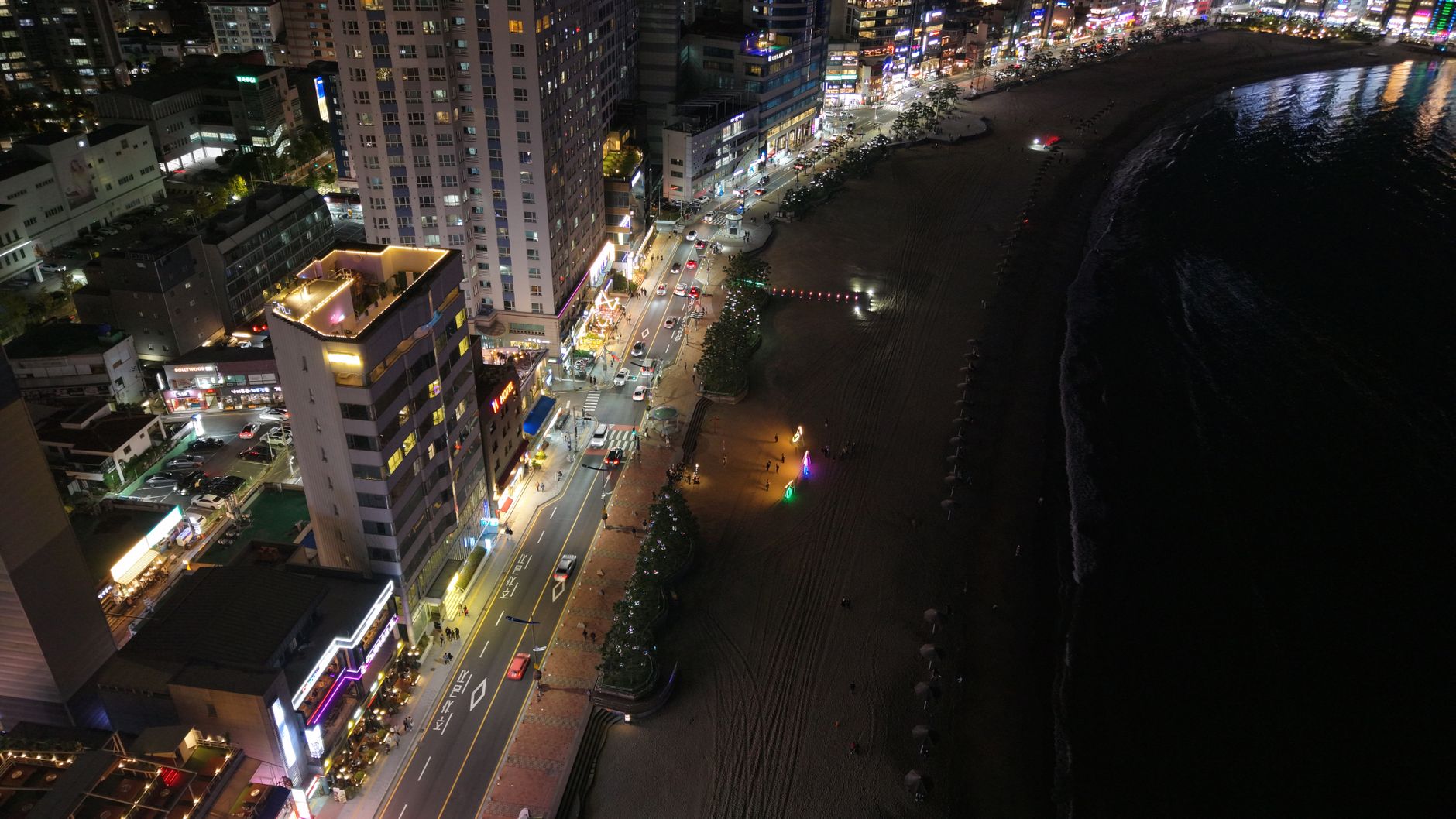
2. Gwangalli Beach (광안리해수욕장) — Best Night View in Busan
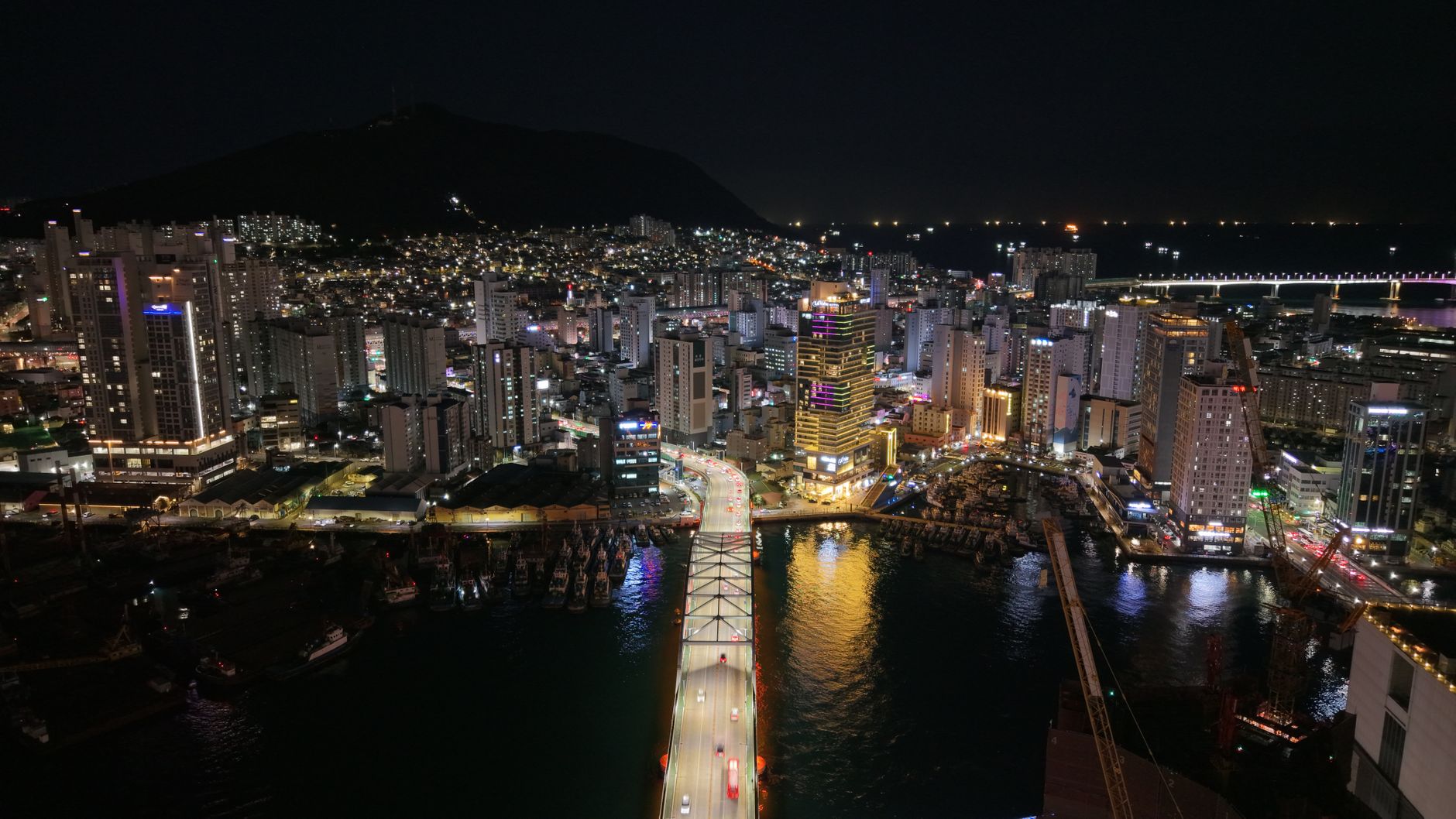
Gwangalli is where I'd send anyone who wants the most Instagram-worthy Busan experience. The beach itself is nice — 1.4 km of fine sand — but the real draw is the view of the Gwangan Bridge (광안대교), especially at night when the bridge lights up in shifting colors. Every restaurant and bar along the waterfront faces this view.
I spent an evening here — arrived around 5 PM, walked the beach, then settled into a seafood restaurant for grilled shellfish and beer. The whole dinner (shared between two people) came to about ₩45,000 (~$33). After dinner, the bridge light show starts at sunset and runs until midnight. It's free to watch from anywhere on the beach.
📍 Address: 219 Gwanganhaebyeon-ro, Suyeong-gu, Busan
📍 View on Google Maps
🚇 Getting there: Metro Line 2, Gwangan Station Exit 3 or 5 (10-minute walk)
⏱️ Time needed: 2–3 hours (come for sunset, stay for the lights)
💴 Admission: Free
🇰🇷 Useful Korean — Beach & Food
- 이거 주세요 (i-geo ju-se-yo) — "This one, please" (point at menu)
- 맛있다! (ma-sit-da!) — "This is delicious!"
- 물 주세요 (mul ju-se-yo) — "Water, please"
- 덜 맵게 해 주세요 (deol maep-ge hae ju-se-yo) — "Less spicy, please"
3. Songjeong Beach (송정해수욕장) — The Chill Local Favorite
Songjeong is just one metro stop past Haeundae, and the difference is night and day. It's smaller (about 800 meters), much quieter, and has a genuine surfer vibe. This is where Busan locals go when they want to avoid the tourist crush. There's a cluster of surf shops offering board rentals (₩20,000–30,000 / ~$15–22 for two hours) and beginner lessons (₩50,000–60,000 / ~$36–44 for a 90-minute group session).
Even if you're not interested in surfing, Songjeong has one of the best beach cafés in Busan — a small cluster of places right on the sand where you can sit with your feet practically in the water. I spent a lazy morning here just reading a book and drinking iced tea, and it was one of my favorite hours of the whole trip.
📍 Address: 62 Songjeong-dong, Haeundae-gu, Busan
📍 View on Google Maps
🚇 Getting there: Donghae Line, Songjeong Station (5-minute walk)
⏱️ Time needed: 2–4 hours
💴 Admission: Free
4. Dadaepo Beach (다대포해수욕장) — Best Sunset, Period
Dadaepo is on the western edge of Busan, facing the open sea, and it has what I'd call the most spectacular sunset view I've experienced in Korea. The beach is wide and flat — almost eerily so at low tide, when the water recedes hundreds of meters and you can walk out on the exposed sand flats. From June through September, there's the Dadaepo Sunset Fountain of Dreams (다대포 꿈의 낙조분수), a massive musical fountain show that runs at 8 PM on weekdays and multiple times on weekends. It's free and genuinely impressive.
📍 Address: 14 Dadaehaesu-ro, Saha-gu, Busan
📍 View on Google Maps
🚇 Getting there: Metro Line 1, Dadaepo Beach Station Exit 4 (10-minute walk)
⏱️ Time needed: 2–3 hours (time your visit for sunset)
💴 Admission: Free
5. Ilgwang Beach (일광해수욕장) — The Hidden Gem
If you want a beach that most foreign tourists never find, Ilgwang is it. Located about 30 minutes northeast of Haeundae on the Donghae Line train, this 500-meter stretch of sand feels like a different country compared to the busy city beaches. Pine trees back the shore, the water is remarkably clear, and even in peak summer the crowd is manageable. When I visited, there were maybe 50 people on the entire beach on a weekday afternoon.
📍 Address: Ilgwang-myeon, Gijang-gun, Busan
📍 View on Google Maps
🚇 Getting there: Donghae Line, Ilgwang Station (15-minute walk)
⏱️ Time needed: Half day
💴 Admission: Free
6. Songdo Beach (송도해수욕장) — The Cable Car Beach
Songdo is Busan's oldest public beach (opened in 1913) and has been nicely redeveloped. The big draw here in 2026 is the Songdo Marine Cable Car, an over-water gondola ride that gives you aerial views of the coastline. Tickets are ₩17,000 (~$12) for a round-trip in the regular cabin, or ₩22,000 (~$16) for the crystal (glass-floor) cabin. There's also the Songdo Skywalk — a glass-bottomed observation platform extending over the sea — which is free.
📍 Address: 171 Songdohaebyeon-ro, Seo-gu, Busan
📍 View on Google Maps
🚇 Getting there: Metro Line 1, Jagalchi Station, then bus 26/30 (15 min)
⏱️ Time needed: 2–3 hours
💴 Admission: Beach free; Cable car ₩17,000–22,000 (~$12–16)
🏨 For hotels in this area, I usually check Agoda first — Korean accommodation prices are often 15–20% lower there than on other platforms, especially for mid-range stays.
Suggested 3-Day Beach-Hopping Itinerary
Day 1 — Haeundae & Haeridan-gil
- Morning: Haeundae Beach walk + coffee (₩6,000)
- Late morning: Explore Haeridan-gil alleys (free)
- Lunch: Seafood kalguksu near the beach (₩9,000)
- Afternoon: Walk the Haeundae Coastal Trail (해운대 해변산책로) to Dalmaji Hill — about 3 km, mostly paved, takes about 1 hour with stops. Beautiful ocean views, shaded sections, benches every few hundred meters
- Evening: Dinner at Haeundae Market (₩15,000–20,000 per person)
Day 2 — Songjeong + Gwangalli Sunset
- Morning: Train to Songjeong Beach. Coffee at a beachfront café, optional surf lesson
- Lunch: Local restaurant near Songjeong (₩8,000–10,000)
- Afternoon: Rest at hotel / explore Centum City area (Shinsegae Department Store has free AC and a rooftop garden)
- Late afternoon: Head to Gwangalli Beach for sunset
- Dinner: Grilled seafood with Gwangan Bridge view (₩20,000–25,000 per person)
- Night: Watch the bridge light show from the beach (free)
Day 3 — Dadaepo or Songdo + Jagalchi Market
- Morning: Visit Dadaepo Beach or take the Songdo Cable Car
- Lunch: Jagalchi Fish Market — pick your fish on the first floor, have it prepared upstairs (₩25,000–40,000 for two, depending on selections)
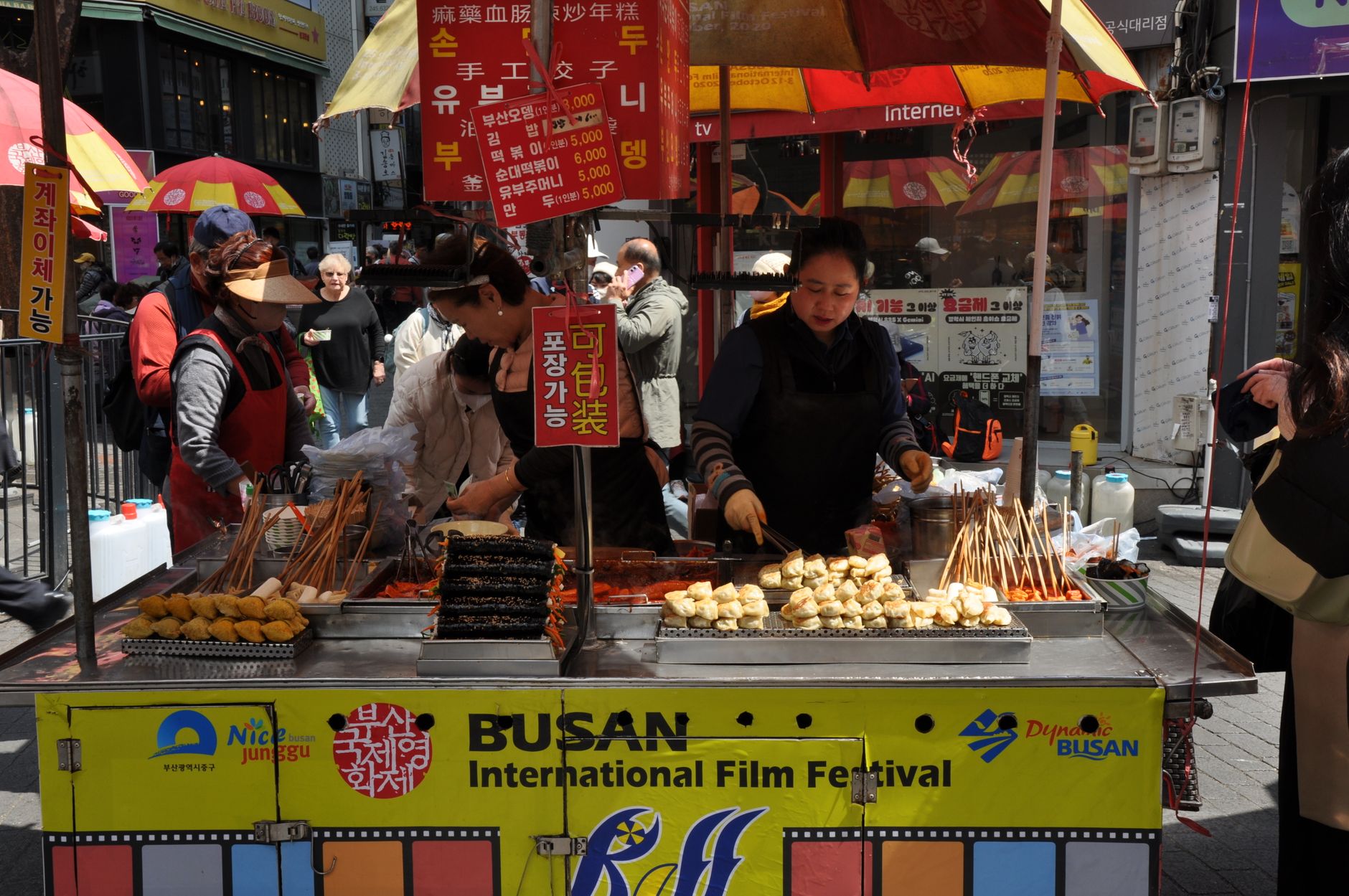
- Afternoon: Walk through BIFF Square in Nampo-dong, try hotteok (sweet pancakes, ₩1,500 each)
- Evening: If at Dadaepo, stay for the sunset fountain show (free, starts 8 PM)
🇰🇷 Useful Korean — Getting Around
- 여기 가 주세요 (yeo-gi ga ju-se-yo) — "Please take me here" (show map to taxi driver)
- 감사합니다 (gam-sa-ham-ni-da) — "Thank you"
- 천천히 말해 주세요 (cheon-cheon-hi mal-hae ju-se-yo) — "Please speak slowly"
- 얼마예요? (eol-ma-ye-yo?) — "How much?"
Real Cost Breakdown for Busan Beach Trip 2026
Here's what I actually spent on a 3-day, 2-night Busan beach trip in summer, with all prices confirmed as of 2026.
| Item | Detail | KRW | USD (approx) |
|---|---|---|---|
| Transport | KTX round trip Seoul–Busan | ₩119,600 | ~$87 |
| Local transport | T-money metro/bus (3 days) | ₩18,000 | ~$13 |
| Accommodation | Mid-range hotel, Haeundae (2 nights) | ₩200,000 | ~$145 |
| Food | Meals + coffee + snacks (3 days) | ₩105,000 | ~$76 |
| Activities | Songdo Cable Car + parasol rental | ₩37,000 | ~$27 |
| Other | T-money card, misc purchases | ₩15,000 | ~$11 |
| Total | 3D2N trip | ₩494,600 | ~$360 |
Budget Tier Comparison (Per Day, Per Person)
| Comfortable | Premium | Splurge | |
|---|---|---|---|
| Per day | ₩120,000–180,000 (~$87–131) | ₩250,000–400,000 (~$182–291) | ₩500,000+ (~$365+) |
| Stay | Clean guesthouse / 2-star hotel near beach | 3–4 star hotel with ocean view | Park Hyatt / Signiel Busan / Ananti Hilton |
| Food | Market food + casual sit-down | Sit-down seafood restaurants | Resort dining + sashimi omakase |
| Transport | Metro + occasional bus | Metro + taxi when convenient | Private car / taxi everywhere |
| Beach style | Bring your own towel | Rent parasol + mat | Hotel beach service / private cabana |
For couples in the 40–60 age range, I'd strongly recommend the Premium tier. The difference between a ₩50,000/night guesthouse and a ₩120,000/night hotel with proper AC, a comfortable bed, and an ocean view is absolutely worth it in Busan's humid summer heat. You'll sleep better, recover faster, and enjoy the trip more.
How Much Does a Busan Beach Trip Cost?
A comfortable 3-day, 2-night Busan beach trip from Seoul costs approximately ₩400,000–500,000 (~$290–365 USD) per person in summer 2026. This includes KTX train tickets, a mid-range hotel near Haeundae, three days of meals at sit-down restaurants, metro transport, and a couple of paid activities. Couples sharing a hotel room can bring this down to roughly ₩350,000 (~$255) per person.

Practical Tips & Warnings for Busan Beaches in Summer 2026
After multiple Busan summer trips, these are the things I wish someone had told me upfront.
1. Sun Protection Is Non-Negotiable
📍 View on Google Maps
Busan's UV index regularly hits 8–10 in July and August. That's "very high" territory. Korean convenience stores (GS25, CU, 7-Eleven) sell excellent Korean sunscreen brands for ₩8,000–15,000 (~$6–11), and honestly, Korean sunscreen formulas are some of the best in the world — lightweight, non-greasy, high SPF. Bring a hat and sunglasses too. I made the mistake of skipping sunscreen for one afternoon walk and got a noticeable burn within 90 minutes.
2. Monsoon Season Overlaps with Beach Season
📍 View on Google Maps
Busan's monsoon (장마, jangma) typically hits in late June through mid-July. In 2026, forecasts suggest the monsoon window is roughly June 20–July 15 for the southern coast. This doesn't mean constant rain — you might get heavy downpours for a few hours, then sunshine. But pack a compact umbrella and have indoor backup plans (Busan Museum of Art, Shinsegae Centum City, Spa Land) for rainy days.
3. T-Money Card Is Essential
📍 View on Google Maps
Get a T-money card at any convenience store (₩2,500 for the card, ~$1.80) and load it with ₩20,000–30,000 for a few days. It works on all metros, buses, and even taxis. The Busan metro is clean, air-conditioned, and has English signage at every station. Honestly, you'll rarely need a taxi unless you're heading somewhere off the metro grid.
4. Shoes Off, Always
📍 View on Google Maps
This isn't beach-specific, but it catches first-timers off guard. When entering any guesthouse, traditional restaurant (especially ones with floor seating), or temple, remove your shoes at the entrance. You'll see a shoe rack or a raised floor — that's your cue. Wearing shoes inside is considered very rude in Korea.
5. Bring Water Shoes for Rocky Beaches
📍 View on Google Maps
Some of Busan's best coastal spots (especially the Haedong Yonggungsa Temple area and parts of the Igidae Coastal Walk) involve rocky shorelines. Regular flip-flops aren't enough. Lightweight water shoes are available at the Haeundae and Gwangalli beach shops for about ₩10,000–15,000 (~$7–11).
6. Credit Cards Work Almost Everywhere
📍 View on Google Maps
Unlike some parts of rural Korea, Busan's beach areas are very card-friendly. Visa and Mastercard are accepted at nearly all restaurants, convenience stores, and attractions. The main exception is small pojangmacha (street food stalls) and some traditional market vendors — carry about ₩30,000 in cash as backup. International ATMs are in every convenience store (look for the "Global ATM" sign).
7. English Menus Are Common, But Not Universal
📍 View on Google Maps
Haeundae and Gwangalli restaurants almost always have English menus or picture menus. Smaller neighborhood spots may not. Naver or Google Translate's camera function (point at Korean text) works surprisingly well for menus. Download the Papago app — it's Korea's best translation app, made by Naver, and handles Korean more accurately than Google Translate.
🗣️ Even 10 Korean phrases change how locals treat you. A Korean phrasebook on Amazon downloaded to your phone goes a long way — especially outside Seoul.
Comfort Notes for 40s–60s Travelers
Busan in summer is hot and humid — expect to sweat. Here's how to stay comfortable:
- Air conditioning breaks: Every beach area has multiple cafés within a 2-minute walk. Duck in for 20–30 minutes when the heat gets intense. Budget ₩5,000–6,000 per café stop.
- Walking distances: Haeundae Beach to Dalmaji Hill is about 3 km on a paved path with benches. The Igidae Coastal Walk is 4.7 km and involves stairs — consider doing only the first 1.5 km to the Oryukdo Skywalk viewpoint if mobility is a concern.
- Taxis are cheap: A taxi from Haeundae to Gwangalli is about ₩8,000–10,000 (~$6–7). Don't force yourself to walk or take the metro if you're tired. Kakao T (ride-hailing app) works like Uber and shows the fare upfront.
- Pharmacies: Look for 약국 (yak-guk) signs — they're everywhere. Pharmacists can recommend basic medications, and many common brands (pain relievers, stomach medicine, allergy pills) are available without prescription.
🇰🇷 Useful Korean — Shopping & Markets
- 깎아 주세요 (kka-kka ju-se-yo) — "Can I get a discount?" (works at traditional markets)
- 카드 돼요? (ka-deu dwae-yo?) — "Do you accept card?"
- 이거 있어요? (i-geo i-sseo-yo?) — "Do you have this?"
- 그냥 볼게요 (geu-nyang bol-ge-yo) — "Just browsing, thanks"
✅ Busan Beach Trip Checklist
- ☐ Book KTX tickets Seoul–Busan (2–3 weeks ahead for weekend travel)
- ☐ Reserve hotel near Haeundae or Gwangalli (4–6 weeks ahead for July–August)
- ☐ Buy T-money card at Seoul or Busan convenience store
- ☐ Download Papago translation app + Kakao Map (better than Google Maps in Korea)
- ☐ Pack: sunscreen (SPF 50+), hat, sunglasses, water shoes, light rain jacket
- ☐ Bring a small daypack for beach days (towel, water bottle, phone in waterproof pouch)
- ☐ Carry ₩30,000–50,000 cash for market food and small vendors
- ☐ Check Dadaepo Fountain schedule for 2026 show times (usually starts early July)
- ☐ Save offline maps of Busan metro on your phone
- ☐ Write any dietary restrictions in Korean on your phone
FAQ: Busan Beaches in Summer 2026
Q: Is Busan worth visiting in summer?
A: Absolutely. Summer is peak beach season in Busan, with warm water temperatures (23–26°C / 73–79°F), long daylight hours, and a festive coastal atmosphere. The trade-off is heat, humidity, and bigger crowds — but with smart timing (weekday visits, early mornings), it's very manageable.
Q: How long do you need in Busan for beaches?
A: Three days is the sweet spot. That gives you time to visit 3–4 beaches, explore Jagalchi Market, enjoy a sunset at Gwangalli, and still have time for a leisurely seafood dinner without rushing. Two days works if you focus on Haeundae and Gwangalli only.
Q: What is Busan known for?
A: Busan is famous for its beaches (especially Haeundae), fresh seafood, the Jagalchi Fish Market, the colorful Gamcheon Culture Village, Haedong Yonggungsa Temple, and its vibrant street food scene. It's Korea's beach capital and a major film festival city (BIFF in October).
Q: Can you swim at Busan beaches in June 2026?
A: You can wade and splash in June, but official swimming season with lifeguards typically starts July 1. Water temperature in June is around 19–22°C (66–72°F) — fine for some, chilly for others. By mid-July, the water is genuinely warm and comfortable.
Q: Is Busan safe for foreign tourists?
A: Very safe. South Korea consistently ranks among the safest countries for travelers. Violent crime against tourists is extremely rare. The biggest practical risks in summer Busan are sunburn, dehydration, and the occasional jellyfish (lifeguards post warnings when jellyfish are spotted — pay attention to the flags).
Q: Do I need to speak Korean in Busan?
A: Not strictly, but a few basic phrases help enormously. Haeundae and Gwangalli have decent English signage and many restaurant staff know basic English. Outside the tourist zones, English drops off quickly. The Papago app is your lifeline — it translates Korean menus, signs, and even speech in real time.
Q: What's the best beach in Busan for couples?
A: Gwangalli Beach for a romantic evening — the Gwangan Bridge light show at night is genuinely beautiful, and the waterfront restaurants are perfect for a shared seafood dinner. For a quieter daytime experience, Songjeong Beach has a relaxed, uncrowded atmosphere that feels more intimate than the big city beaches.
Related Posts
이미지 출처: Photo by Jhany Blue on Pexels | Photo by HOWARD HERDI on Pexels | Photo by makafood on Pexels | Photo by 自忎 Dong-hyeon Kim on Pexels


0 Comments