この話題を日本語で読む: 韓国旅行の持ち物15選2026:現地で本当に必要だったもの

I Thought I Was Ready for Korean Summer. I Was Not.
Let me be honest with you: I'd read about Korean summers before my first June trip, and I still wasn't prepared. The moment I stepped out of Incheon Airport, the humidity hit me like a wall of warm, wet laundry. My glasses fogged up. My cotton T-shirt was soaked through within twenty minutes. And that was at 9 AM.
If you're planning a Korea trip in summer 2026, I'm not here to scare you off — June is actually one of the most vibrant, exciting months to visit. The country is lush green, street food carts run late into the night, festivals pop up everywhere, and accommodation prices haven't spiked to peak season levels yet. But you need a game plan. Not a vague "oh I'll bring sunscreen" plan, but a real strategy for staying comfortable while temperatures climb into the low 30s Celsius (upper 80s–90s°F) and humidity regularly hovers above 70%.
Honestly, my biggest mistake was scheduling a packed outdoor itinerary like I would in spring or fall. By 1 PM on my first day in Seoul, I was ducking into a convenience store just to stand in the air conditioning and drink iced barley tea. What I didn't expect was how drastically the heat changes the rhythm of a good Korea trip — you eat differently, sightline differently, and honestly you enjoy it more once you lean into the summer pace instead of fighting it.
This guide covers everything I wish someone had told me before that first sweat-drenched June: how to structure your days around the heat, where to find relief, what to pack, real costs as of 2026, and the cultural quirks of Korean summer that nobody mentions in generic travel guides. Whether it's your first visit or you're coming back for bingsu season, these Korea summer travel tips will keep you cool and happy.
📚 For deeper planning, there are some solid Korea travel guides on Amazon — Lonely Planet Korea is the standard, but the Time Out Seoul guide is better for food and nightlife.
🎒 Still prepping your bag? Amazon has a solid selection of Korea travel essentials — the Type C/F adapter and a portable charger are the two things most people forget.
Overview: What June in Korea Is Really Like in 2026
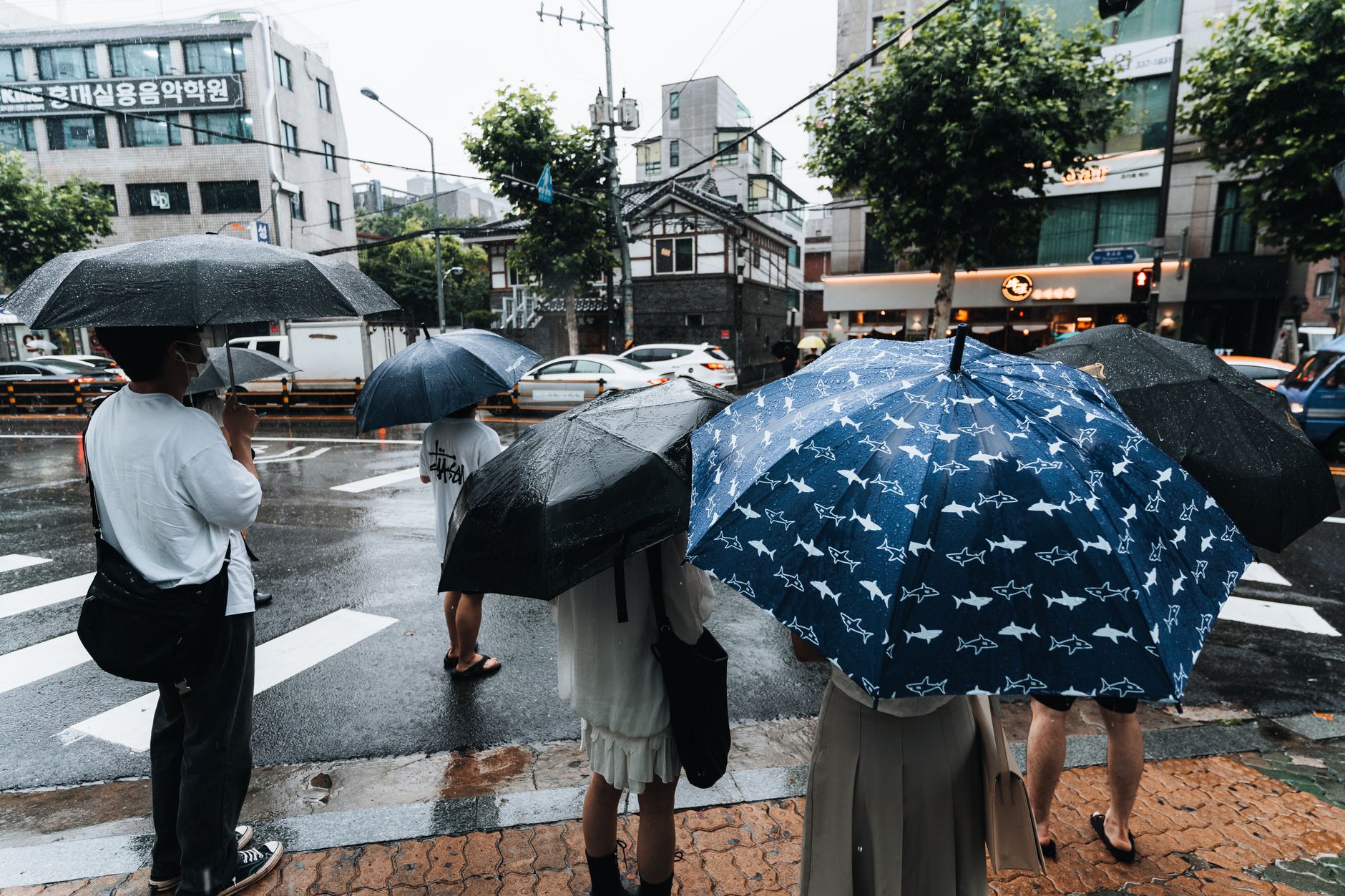
June in Korea sits right at the crossroads between late spring freshness and full-blown monsoon summer. Early June (roughly June 1–15) tends to be warm but manageable — think 24–29°C (75–84°F) with moderate humidity. By late June, you're entering jangma (장마), the monsoon season, which in 2026 is forecast to begin around June 20–25 depending on the region. That means heavier rain, thicker humidity, and temperatures pushing 30–33°C (86–91°F).
The country is stunning in green. Rice paddies outside Seoul glow neon, mountain trails are thick with foliage, and hydrangeas bloom across the southern coast. It's a photographer's dream — when the sun cooperates.
Getting to Korea in June 2026 is straightforward. Incheon International Airport (ICN) has direct flights from most major international hubs. As of 2026, budget carriers like Jin Air, T'way, and Air Busan offer competitive summer fares — I've seen round trips from Southeast Asia for under $300 and from the US West Coast for $700–900 if booked 6–8 weeks ahead. From Incheon, the Airport Express (AREX) takes about 43 minutes to Seoul Station (₩9,500 / ~$7 for the express, as of 2026).
Budget-wise, June is shoulder-to-peak season. Hotels and guesthouses are cheaper than July–August but pricier than spring. Expect to pay 10–20% more than April/May rates. Street food and restaurant prices stay consistent year-round, though some seasonal items (like fresh watermelon juice and patbingsu) appear on menus everywhere.
Best Time to Visit Korea in Summer
| Period | Crowds | Weather | Notes |
|---|---|---|---|
| Early June (1–15) | Moderate | Warm, partly cloudy, 24–29°C | Best window — pre-monsoon, comfortable mornings |
| Late June (16–30) | Moderate–High | Hot & humid, rain begins, 28–33°C | Jangma onset — pack rain gear, plan indoor activities |
| Early July (1–15) | High | Heavy monsoon rain, 29–34°C | Wettest period — some trails close, waterfalls are spectacular |
| Late July–Aug | Peak | Extremely hot & humid, 30–36°C | School holidays, beaches packed, highest prices |
For the sweet spot: early-to-mid June 2026 is your best bet. You get summer energy without the monsoon downpours or August crowds.
How to Beat the June Heat: Your Day-by-Day Strategy
Here's the single biggest Korea summer travel tip I can give you: restructure your day. Forget the 9 AM to 9 PM sightseeing marathon. In June, your day should look like this:
Morning Block: 7:00 AM – 11:00 AM (Outdoor Time)
This is your golden window. Temperatures are in the low-to-mid 20s, the light is soft, and major attractions are less crowded. I'd hit outdoor highlights — palaces, markets, parks — before 11 AM.
💡 You can book tickets for this in advance on Klook — often cheaper than buying at the door, and you skip the queue.
Gyeongbokgung Palace opens at 9:00 AM (as of 2026), and I cannot stress enough how different it feels at opening versus 2 PM. At 9 AM, you get photos without 200 people in hanbok behind you, and the stone courtyards haven't turned into a griddle yet.
📍 Address: 161 Sajik-ro, Jongno-gu, Seoul
📍 View on Google Maps
🚇 Getting there: Line 3, Gyeongbokgung Station Exit 5 (3 min walk)
⏱️ Time needed: 1.5–2 hours
💴 Admission: ₩3,000 (~$2.20 USD) — free if wearing hanbok (2026 pricing)
Bukchon Hanok Village is right next door and best walked in the early morning when residents haven't put up the "Quiet Please" signs yet (they will by 10 AM — respect them).
📍 Address: 37 Gyedong-gil, Jongno-gu, Seoul
📍 View on Google Maps
🚇 Getting there: Line 3, Anguk Station Exit 2 (5 min walk)
⏱️ Time needed: 1–1.5 hours
💴 Admission: Free (outdoor neighborhood)
🇰🇷 Useful Korean — At Palaces & Cultural Sites
- 안녕하세요 (an-nyeong-ha-se-yo) — "Hello / Good day"
- 사진 찍어도 돼요? (sa-jin jji-geo-do dwae-yo?) — "May I take a photo?"
- 죄송합니다 (joe-song-ham-ni-da) — "I'm sorry / Excuse me"
- 화장실 어디예요? (hwa-jang-sil eo-di-ye-yo?) — "Where is the restroom?"
Midday Block: 11:00 AM – 3:00 PM (Go Underground)
This is survival mode. The sun is brutal, the UV index in Korea in June regularly hits 8–10 ("very high"), and the humidity makes 31°C feel like 37°C. Here's where you take advantage of Korea's incredible indoor infrastructure:
- Underground shopping malls: COEX Mall (Gangnam), Goto Mall (Express Bus Terminal), Myeongdong Underground — all massive, all air-conditioned, all connected to subway stations
- Museums & galleries: National Museum of Korea (free admission, world-class, easily 3 hours), Leeum Museum of Art (₩16,000 / ~$12 as of 2026), or Seoul Museum of History (free)
- Jjimjilbangs (Korean spas): This sounds counterintuitive — a spa when it's hot? But the cool rooms (얼음방, eoreum-bang) are literally ice-cold chambers where you lie on frozen floors. Dragon Hill Spa in Yongsan is the classic tourist-friendly option (₩22,000 / ~$16 for weekday entry, 2026 pricing) and open 24 hours.
- Cafés: Korea's café culture is your best friend. Grab an iced Americano (₩4,500–6,000 / ~$3.30–4.40) and camp out for an hour. Nobody will rush you.
💡 You can book tickets for this in advance on Klook — often cheaper than buying at the door, and you skip the queue.
📍 National Museum of Korea
📍 Address: 137 Seobinggo-ro, Yongsan-gu, Seoul
📍 View on Google Maps
🚇 Getting there: Line 4 or Jungang Line, Ichon Station Exit 2 (direct covered walkway)
⏱️ Time needed: 2–3 hours
💴 Admission: Free (special exhibitions vary, ₩5,000–10,000)
Afternoon Block: 3:00 PM – 5:00 PM (Bingsu O'Clock)
This is when you eat Korea's greatest summer weapon: patbingsu (팥빙수). Shaved ice piled high with red bean, condensed milk, mochi, fruit, and whatever else the café decides to add. It's not a small dessert — most servings are meant for two people.
The best bingsu spots in Seoul as of 2026:
- Sulbing (설빙) — chain, reliable, mango bingsu is ₩14,900 (~$11)
- Café Bora near Gyeongbokgung — purple sweet potato bingsu, Instagram-famous, ₩16,000 (~$12)
- Mildo in Jongno — a local favorite, less tourist traffic, generous portions around ₩13,000 (~$9.50)

Evening Block: 5:00 PM – Late (Best Time to Be Outside)
Sunset in Seoul in June is around 7:50 PM, and the temperature drops to a much more bearable 24–26°C by 8 PM. This is when Korea comes alive in summer.
- Gwangjang Market for dinner — bindaetteok (mung bean pancakes, ₩5,000), mayak gimbap (₩3,500), and knife-cut noodles (₩8,000). The market is partially covered, so even if it rains, you eat in comfort.
- Cheonggyecheon Stream walk — the waterway through central Seoul is lit up at night and noticeably cooler than street level
- Han River parks (Banpo, Yeouido, Ttukseom) — Koreans bring fried chicken and beer (chimaek) to the riverbank at night. Join them. Convenience stores along the river sell everything you need, or order delivery right to the grass via apps like Baemin or Yogiyo.
- Namsan Tower at night — skip the daytime hike and take the cable car up after 7 PM. The city lights are better than the daytime haze view anyway.
📍 Gwangjang Market
📍 Address: 88 Changgyeonggung-ro, Jongno-gu, Seoul
📍 View on Google Maps
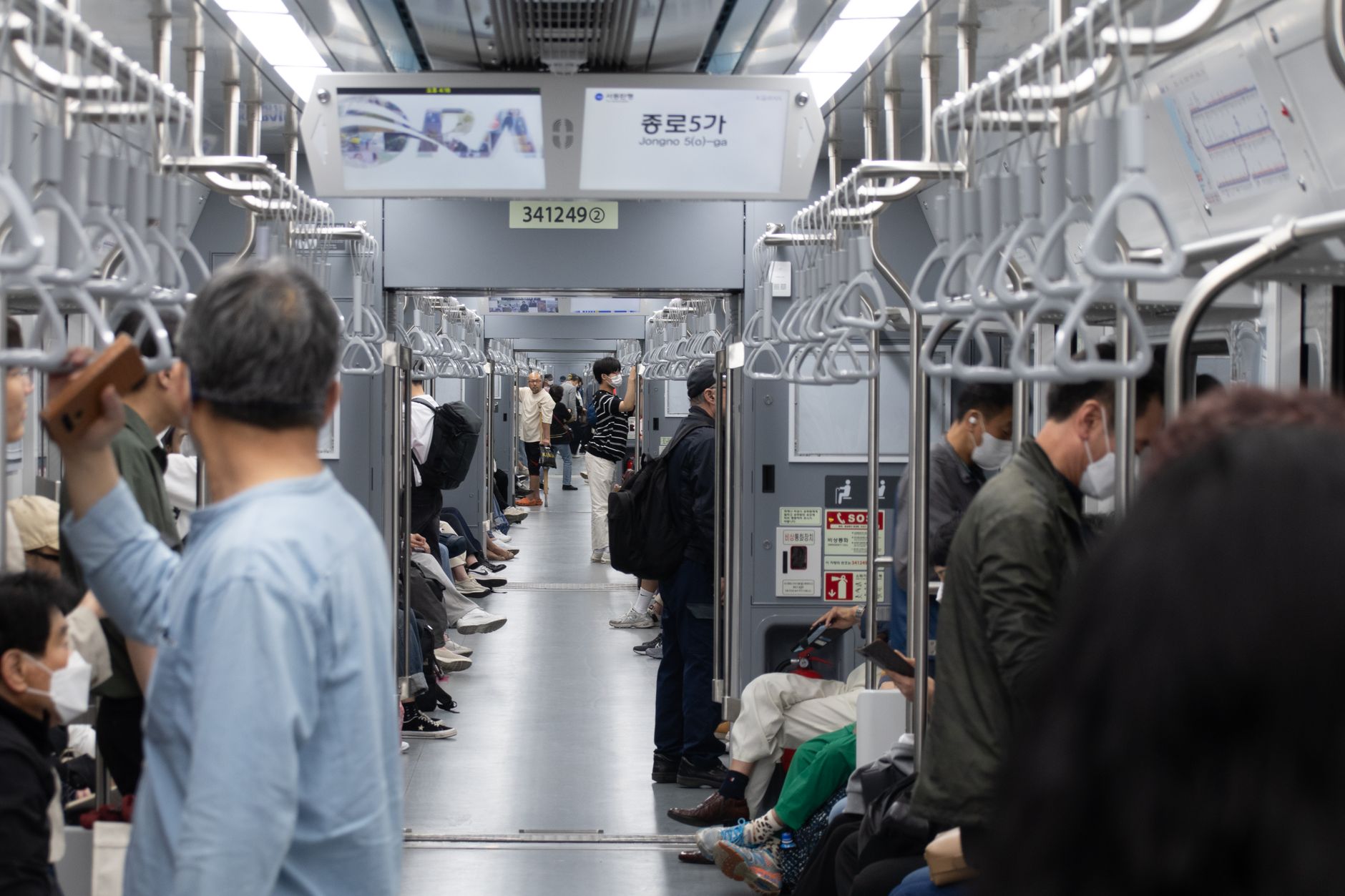
🚇 Getting there: Line 1, Jongno 5-ga Station Exit 8 (1 min walk)
⏱️ Time needed: 1–2 hours
💴 Cost: ₩15,000–25,000 for a full meal (~$11–18)
🇰🇷 Useful Korean — Food & Street Markets
- 이거 주세요 (i-geo ju-se-yo) — "This one, please" (point at what you want)
- 덜 맵게 해 주세요 (deol maep-ge hae ju-se-yo) — "Less spicy, please"
- 맛있다! (ma-sit-da!) — "This is delicious!"
- 물 주세요 (mul ju-se-yo) — "Water, please"
- 포장해 주세요 (po-jang-hae ju-se-yo) — "To go, please"🏡 If you're basing yourself here for a few nights, Agoda tends to have the best rates for Korean guesthouses and business hotels — filter by 'free cancellation' to keep flexibility.
Real Cost Breakdown: June 2026 Korea Trip
Here's what a realistic 4-day Seoul-based summer trip costs as of June 2026, based on a mid-range budget:
| Item | Detail | KRW | USD (approx) |
|---|---|---|---|
| Airport transfer | AREX express (one way) | ₩9,500 | ~$7 |
| Transport (4 days) | T-money card, subway + bus | ₩30,000 | ~$22 |
| Accommodation (3 nights) | Mid-range hotel / Airbnb | ₩240,000 | ~$175 |
| Food (4 days) | Mix of street food + restaurants | ₩140,000 | ~$102 |
| Attractions | Palace, museum, Namsan cable car | ₩25,000 | ~$18 |
| Bingsu & cafés | 3–4 stops over 4 days | ₩40,000 | ~$29 |
| Jjimjilbang (1 visit) | Dragon Hill Spa or similar | ₩22,000 | ~$16 |
| Sunscreen + misc | Pharmacy, drinks, umbrella | ₩25,000 | ~$18 |
| Total | 4D3N mid-range | ₩531,500 | ~$387 |
Budget Tier Comparison (Per Day, June 2026)
| Budget | Mid-Range | Luxury | |
|---|---|---|---|
| Per day | ₩80,000–120,000 (~$58–87) | ₩150,000–280,000 (~$109–204) | ₩500,000+ (~$365+) |
| Stay | Hostel dorm / capsule hotel | 3–4 star hotel, Airbnb | Boutique hotel / 5-star (Josun Palace, Signiel) |
| Food | Convenience store + street food + kimbap shops | Sit-down Korean restaurants, café stops | Fine dining, rooftop bars, hotel restaurants |
| Cooling strategy | Free museums, subway hopping, river parks | Jjimjilbang, shopping malls, bingsu cafés | Hotel pool, private sauna, taxi everywhere |
Practical Tips & Warnings for Summer Korea Travel
Here are the things that will actually save your trip:
1. Dress for Humidity, Not Just Heat
Cotton is your enemy. It absorbs sweat and stays wet. Wear moisture-wicking, quick-dry fabrics. Korean outdoor brand shops like Mont-bell and Black Yak (found in most malls) sell excellent lightweight summer gear if you didn't pack right — prices range from ₩20,000–60,000 for a decent shirt.
Shorts and sleeveless tops are totally fine in Seoul. Koreans dress more conservatively at temples (cover shoulders and knees), but in Hongdae, Gangnam, or Itaewon, anything goes.
2. Carry a Portable Fan and Wet Wipes
I was surprised to find that nearly every Korean person on the subway in June is holding a small portable fan. You can buy a USB-rechargeable handheld fan at any Daiso store for ₩3,000–5,000 (~$2.20–3.65). It is not optional. It's survival gear.
Wet wipes (물티슈, mul-ti-syu) are equally essential. Sweat + sunscreen + city grime = you'll want to wipe down your face and neck every couple hours. Available at every convenience store for ₩1,000–2,000.
3. Hydrate Aggressively
Korea makes this easy. Every convenience store (GS25, CU, 7-Eleven, Emart24) sells water for ₩800–1,000 and sports drinks like Pocari Sweat for ₩1,500. Many subway stations have water fountains. Traditional Korean drinks like barley tea (보리차, bori-cha) and corn tea (옥수수차, oksusu-cha) are served free at most Korean restaurants — they're cold, slightly nutty, and genuinely refreshing.
4. Embrace the Rain (Late June)
If you're visiting during the last week of June 2026, the monsoon (jangma) will likely have started. This doesn't mean nonstop rain — it means sudden, heavy downpours that last 30 minutes to 2 hours, followed by muggy sunshine. A compact umbrella is mandatory. You can buy transparent umbrellas at any convenience store for ₩5,000, but I'd bring a sturdy travel umbrella from home.
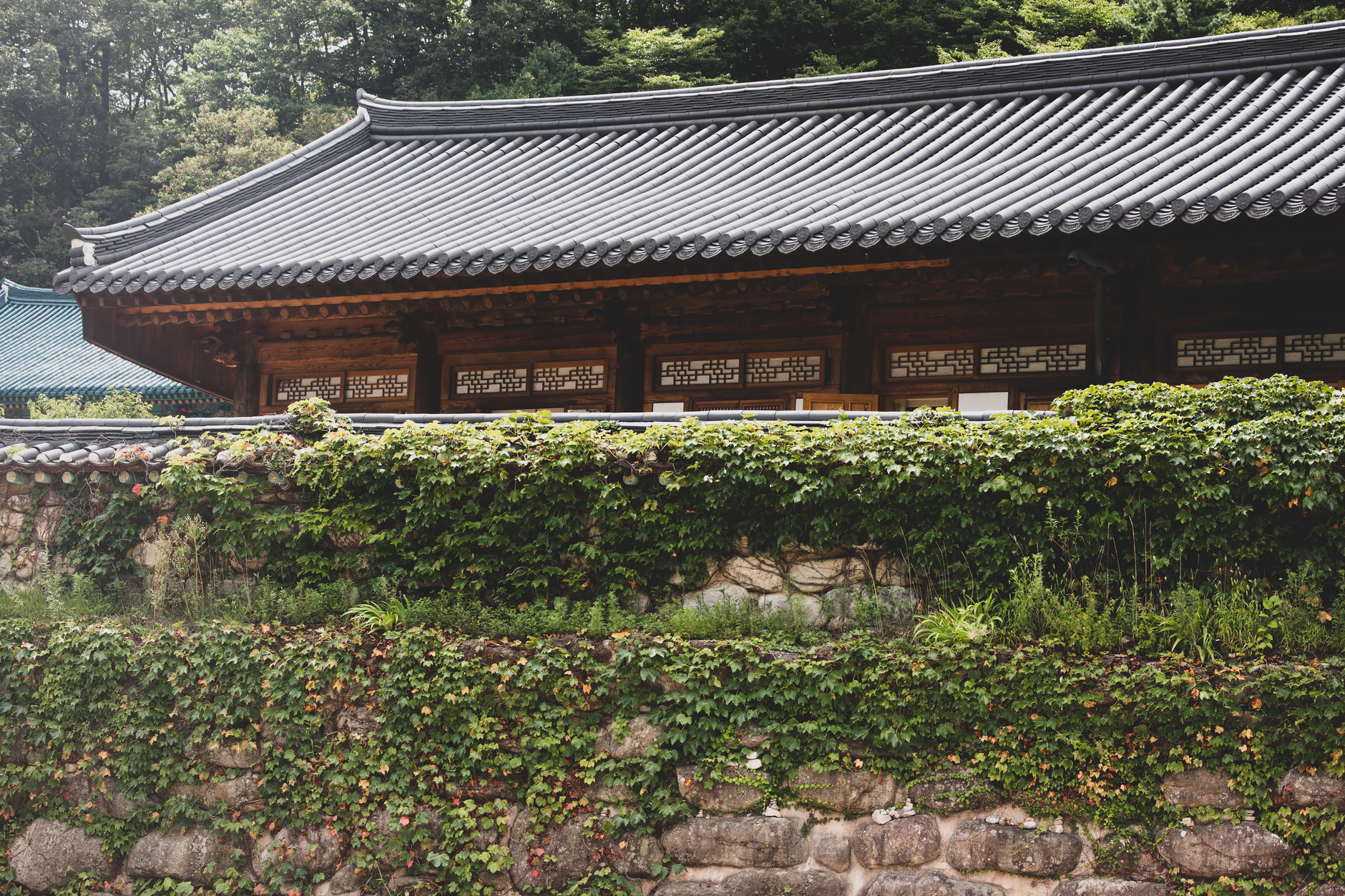
Personally, some of my favorite Korea memories are from rainy days — temples in the mist, the sound of rain on hanok tile roofs, empty hiking trails. Don't cancel plans just because of rain. Adjust them.
5. Know the Cultural Summer Quirks
Koreans have a concept called 복날 (boknal) — the hottest days of summer — during which it's traditional to eat 삼계탕 (samgyetang), a whole chicken stuffed with ginseng, rice, and jujubes, simmered in hot broth. Yes, hot soup in extreme heat. The logic is "fight fire with fire" — the hot food makes you sweat, which cools you down. Honestly? It works. A bowl runs ₩14,000–18,000 (~$10–13) at most restaurants. Try it at least once.
Also, Korean air conditioning is aggressive. Subways, malls, and restaurants are often set to 18–20°C. Bring a light layer for indoor spaces — the temperature swing between outside and inside can make you feel ill if you're not careful.
6. Book Popular Spots in Advance
7. Download Essential Apps
As of 2026, these are non-negotiable:
- Naver Map or KakaoMap — Google Maps works in Korea but routing/transit info is inferior. Naver Map has English support and real-time bus tracking.
- Papago (by Naver) — best Korean-English translation app, better than Google Translate for Korean
- T-money app — check your card balance digitally
- KakaoTaxi — Korea's Uber equivalent, works well, prices displayed upfront
Best Cooling-Off Escapes Near Seoul (June 2026)
When the city heat gets unbearable, these day trips offer genuine relief:
Pocheon Art Valley (포천 아트밸리)
An abandoned granite quarry turned into a turquoise lake surrounded by cliffs. The water and stone keep the microclimate significantly cooler than Seoul. About 1.5 hours by car or bus from Seoul.
📍 Address: 234 Art Valley-ro, Sinbuk-myeon, Pocheon-si, Gyeonggi-do
📍 View on Google Maps
🚇 Getting there: Bus from Dongdaemun or Suwon (no direct subway) — about 90 min
⏱️ Time needed: 3–4 hours
💴 Admission: ₩5,000 (~$3.65), monorail extra ₩4,500
Muuido Island Beach (무의도)
The closest real beach to Seoul — just off the coast near Incheon Airport. It's no Busan, but the ocean breeze drops the temperature by 4–5 degrees and it's reachable in about 1.5 hours from central Seoul.
Korean Water Parks
Caribbean Bay (Yongin, near Everland) and Ocean World (Hongcheon, Gangwon-do) are Korea's two major water parks. Both are packed on weekends but manageable on weekdays. Caribbean Bay tickets are around ₩58,000 (~$42) for adults in June 2026. Go on a Tuesday or Wednesday.
🇰🇷 Useful Korean — Getting Around
- 여기 가 주세요 (yeo-gi ga ju-se-yo) — "Please take me here" (show your phone map to taxi driver)
- 감사합니다 (gam-sa-ham-ni-da) — "Thank you" (formal — use this everywhere)
- 천천히 말해 주세요 (cheon-cheon-hi mal-hae ju-se-yo) — "Please speak slowly"
- 카드 돼요? (ka-deu dwae-yo?) — "Do you accept card?"🎵 If you want the atmosphere before you arrive, GrooveSeoul Studio has drive and scenic videos from Seoul, Busan, and beyond.
What to Pack for Korea in June 2026
After multiple summer trips, here's my actual packing list — not the generic one, the real one:
- Moisture-wicking shirts (2–3) — you'll rotate and wash
- Lightweight quick-dry pants or shorts — at least 2 pairs
- Compact umbrella (sturdy, not flimsy)
- Portable USB fan — or buy one at Daiso when you arrive
- SPF50+ sunscreen — or buy Korean brands on arrival (they're excellent)
- Sunglasses + hat — wide brim if you're doing outdoor sightseeing
- Light cardigan or hoodie — for aggressively air-conditioned interiors
- Comfortable walking shoes — waterproof or quick-dry soles if visiting late June
- Reusable water bottle — convenience store refills save money
- Small towel/handkerchief — Koreans carry these. You'll understand why by Day 1
- Power bank — your phone running Naver Map, KakaoTaxi, and camera all day drains fast
✅ Trip Checklist: Korea Summer 2026
- [ ] Book flights 6–8 weeks ahead for best summer fares
- [ ] Reserve accommodation — mid-June fills up faster than you'd expect
- [ ] Download Naver Map, Papago, and KakaoTaxi before departure
- [ ] Buy or locate T-money card on arrival (any convenience store)
- [ ] Pack moisture-wicking clothes, umbrella, and sunscreen
- [ ] Pre-book any DMZ tours, day trips, or KTX tickets 2+ weeks out
- [ ] Check monsoon (jangma) forecast for late June dates
- [ ] Bring a portable fan or budget ₩5,000 to buy one at Daiso
- [ ] Have a mix of indoor and outdoor activities planned each day
- [ ] Save your accommodation address in Korean on your phone (for taxi drivers)
How Long Do You Need in Korea in Summer?
For a solid summer trip, 5–7 days is the sweet spot. That gives you 3–4 days in Seoul with the pacing adjustments I described above, plus 2–3 days for a day trip or side destination (Busan's beaches, Jeonju's food scene, or Gangwon-do's mountains). Trying to cram Korea into 3 days during summer will exhaust you — the heat demands a slower pace, and rushing through outdoor sites at midday is genuinely miserable.
If you only have a long weekend (3–4 days), stick to Seoul and use the morning/evening outdoor schedule. You'll still have an incredible time.
FAQ: Korea Summer Travel 2026
Q: Is June a good time to visit Korea?
A: Yes — early June (before monsoon) is one of the best summer windows. The country is green, vibrant, and less crowded than July–August. Just prepare for heat and humidity, especially after mid-June.
Q: How hot does Korea get in June 2026?
A: Expect daytime temperatures of 25–33°C (77–91°F), with humidity often above 70%. Early June is milder; late June gets hotter as monsoon moisture moves in. The "feels like" temperature with humidity factored in can reach 37–38°C.
Q: Is it worth visiting Korea during monsoon season?
A: Absolutely — monsoon rain is typically intermittent, not all-day. You'll get sudden heavy showers followed by clearing. Indoor attractions, shopping, and food culture are so strong in Korea that rainy days are still excellent. Some of the most atmospheric temple and palace photos happen in the rain.
Q: What should I wear in Korea in June?
A: Lightweight, moisture-wicking fabrics. Shorts and T-shirts are fine for casual sightseeing. Bring a light layer for extreme indoor AC. If visiting temples, pack something that covers your shoulders and knees. Waterproof shoes help in late June.
Q: Can I use credit cards everywhere in Korea?
A: Almost everywhere — Korea is one of the most card-friendly countries in Asia. Visa and Mastercard are accepted at virtually all shops, restaurants, convenience stores, and transit systems. The only exceptions are some traditional market stalls and very small street food vendors, where cash (Korean won) is still preferred. Carry ₩30,000–50,000 in cash as backup.
Q: Is Korea expensive in summer?
A: It's moderate. A budget traveler can get by on ₩80,000–120,000/day (~$58–87 USD) including hostel, street food, and transit. Mid-range comfort runs about ₩150,000–280,000/day. Compared to Japan or Western Europe, Korea offers excellent value, especially for food.
Q: Do I need to speak Korean to travel in Korea?
A: No, but a few phrases go a long way. Seoul's subway system has full English signage, most restaurants in tourist areas have picture menus or English translations, and apps like Papago handle real-time translation. Younger Koreans often speak basic-to-good English. In rural areas, language barriers are more common — that's where Papago becomes essential.
Related Posts
Looking for more Korea travel planning? Check these out:
이미지 출처: Photo by 정규송 Nui MALAMA on Pexels | Photo by makafood on Pexels | Photo by Ricky Esquivel on Pexels | Photo by Tonmoy Bhakta on Pexels | Photo by wal_ 172619 on Pexels


0 Comments